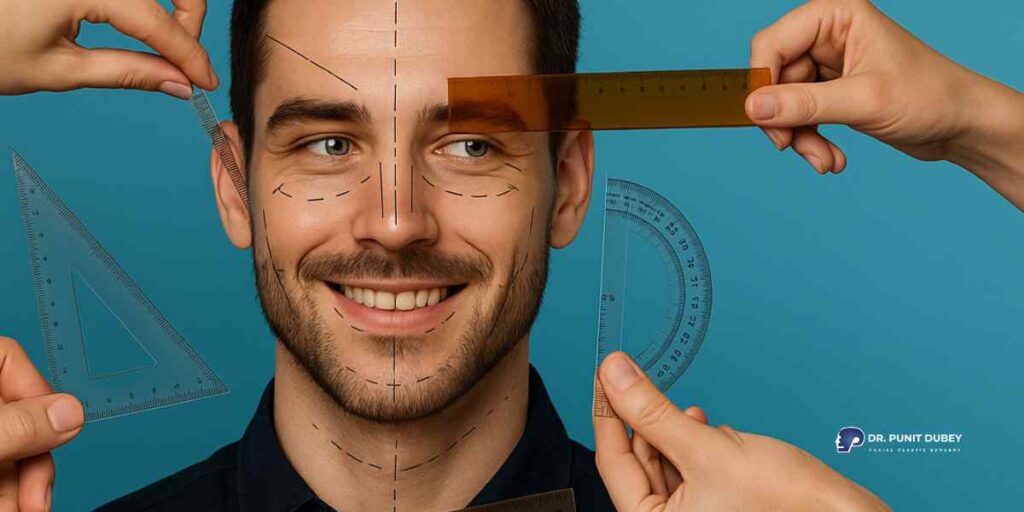
How to Fix Asymmetrical Face in 2026: From Fillers to Jaw Surgery

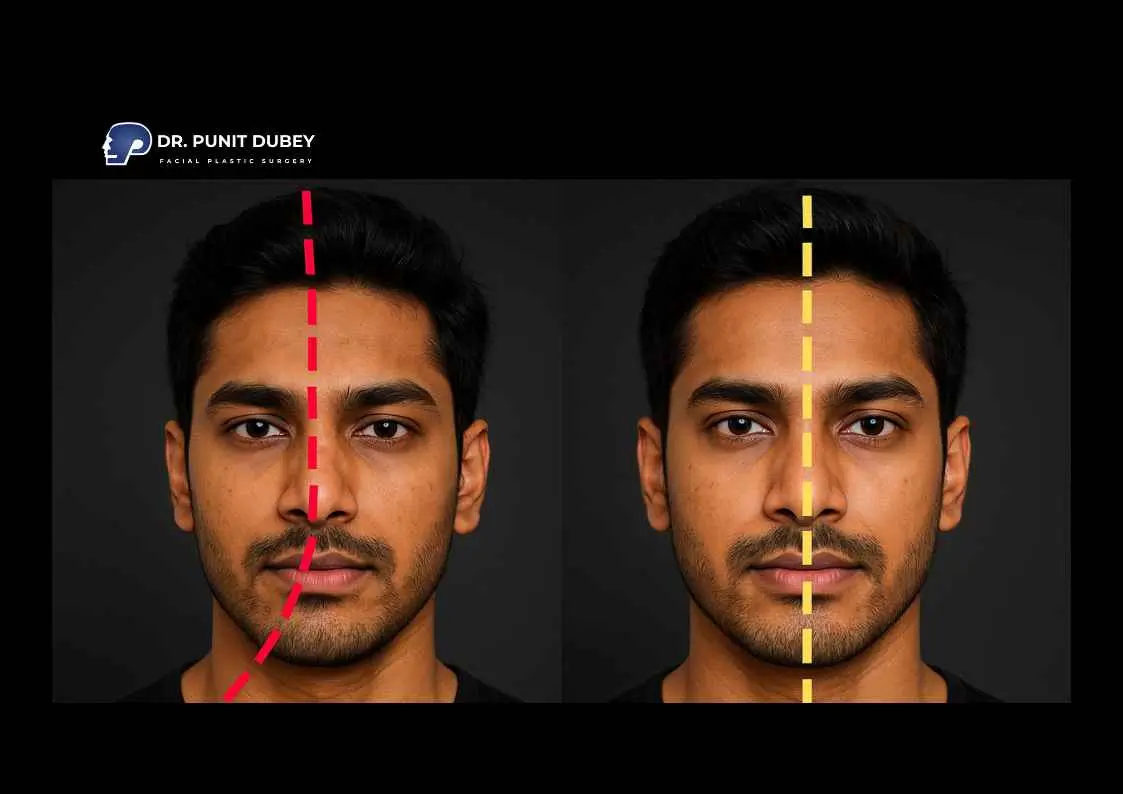
How to fix asymmetrical face in 2026 using fillers, facial implants, and jaw surgery for facial balance correction in Delhi, India by Dr. Punit Dubey.

When Your Face Feels “Off” — But You Can’t Explain Why
They say something simpler. More intuitive.

“My face looks uneven.”
“One side feels different.”

That feeling—the sense that something is slightly off—is often the first sign of facial asymmetry.

And here’s the important part:
It’s rarely about one feature.

It’s about how everything relates to everything else.

Because the human eye doesn’t measure symmetry like a ruler.
It reads balance, proportion, and flow.

A face can be technically symmetrical and still look unnatural.
And an asymmetrical face can look incredibly attractive—if the balance is right.

So, when we talk about how to fix asymmetrical face,
we’re not chasing perfection.

We’re understanding why the imbalance exists—and where it actually begins.

Table of Contents

What Is Facial Asymmetry? (And When It Actually Matters)

The Simple Definition

Facial asymmetry refers to a difference in balance or proportion between the two sides of the face, where one side does not perfectly mirror the other.

That could involve:

  • Jaw position
  • Chin alignment
  • Cheek volume
  • Eyelid height
  • Eyebrow position
  • Nose deviation
  • Ears

Facial Asymmetry Surgery in Delhi by Dr. Punit Dubey – Restore Harmony to Your Face

In natural human anatomy, a certain level of facial asymmetry exists in virtually every individual.

It’s normal. It’s human.

The Difference Between Normal vs Noticeable Facial Asymmetry


Here’s where it becomes clinically relevant:

Normal asymmetry:

  • Subtle differences
  • Not easily noticeable
  • Doesn’t affect overall facial harmony

Noticeable asymmetry:

  • One side appears heavier, lower, or more prominent
  • Chin or jaw deviates off-centre
  • Eyes or brows look uneven
  • Becomes more obvious in photos or videos

The shift from “normal” to “noticeable” isn’t about measurement.

It’s about perception.

Asymmetrical Face vs Symmetrical Face

There’s a common misconception that a perfectly symmetrical face is the ideal.

It isn’t.

In fact, perfectly mirrored faces often look artificial.

What the eye actually finds attractive is:

  • Balance
  • Proportion
  • Continuity of lines

Not perfect symmetry.

This is why, in practice, we don’t aim to make both sides identical.

We aim to make the face feel visually harmonious.

Why This Distinction Matters

If you misunderstand the problem,
you’ll choose the wrong treatment.

  • Treating asymmetry as a “volume problem” → leads to overfilling
  • Treating a structural issue with surface treatments → leads to temporary or unnatural results

And this is where most people go wrong.

Because an asymmetrical face is not a single problem.

It’s a multi-layered condition.

Why Does Facial Asymmetry Happen? (The Real Causes Most People Miss)

When someone searches how to fix asymmetrical face, the instinct is to look for a solution.

But before treatment comes something far more important:
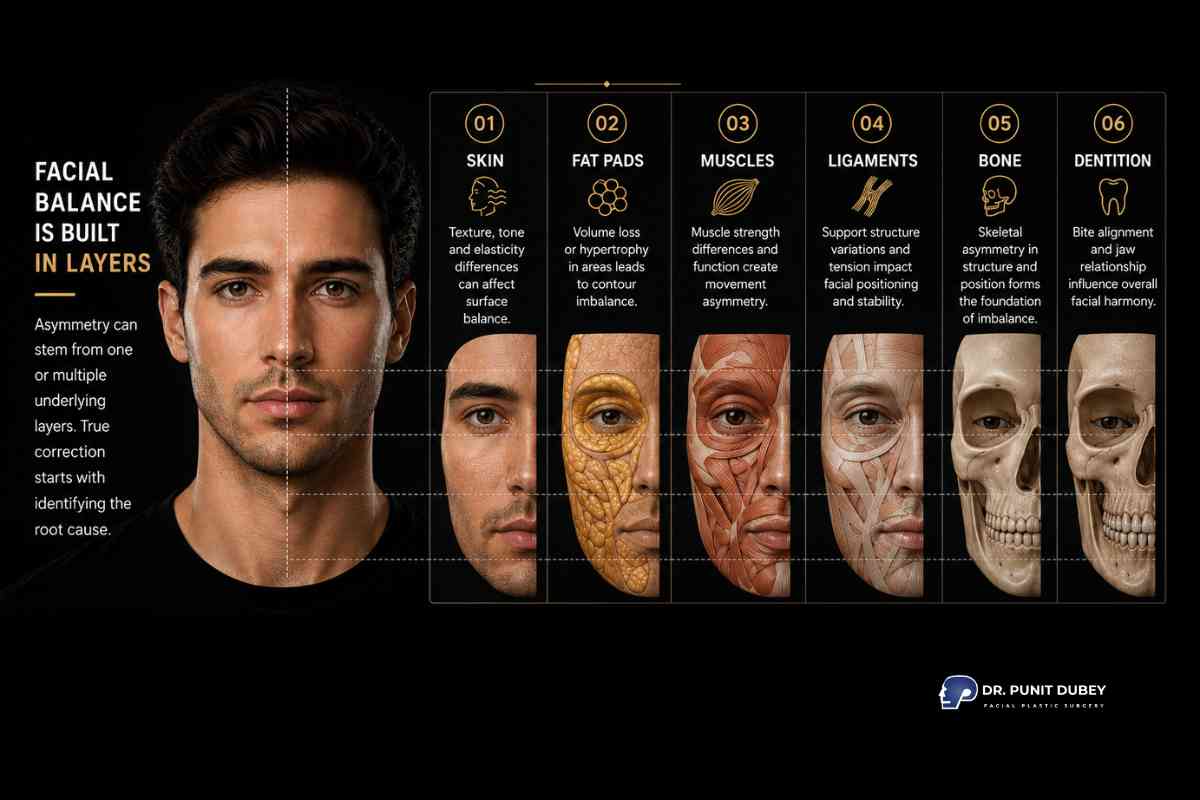
Causes of asymmetrical face including jaw imbalance, genetics, facial bone asymmetry, and aging changes.
Facial asymmetry can result from skeletal imbalance, jaw misalignment, genetics, trauma, aging, or uneven soft tissue development.


Diagnosis.

Because facial asymmetry is not a single condition.
It’s a result of different layers behaving differently on each side.

Unless the exact anatomical layer causing the imbalance is identified, any treatment is likely to feel partial or incomplete.

1. Structural Causes (Bone & Jaw)

This is where most true asymmetry begins.

The face is built on a skeletal framework.
If that foundation is off—even slightly—the imbalance shows everywhere else.

Common structural causes include:

  • Jaw asymmetry (one side longer, wider, or rotated)
  • Chin deviation (a slight shift of the chin away from the facial midline that can significantly influence facial symmetry and visual proportion)
  • Midface skeletal imbalance
  • Developmental asymmetry from growth patterns

Here’s what most people miss:

What looks like a “cheek problem” is often a jaw problem.
What looks like “uneven volume” may actually be bone asymmetry.

And no amount of filler can truly correct that.

2. Soft Tissue Causes (Fat & Volume)

This is often the stage where facial imbalance gradually becomes more noticeable as the years progress.

Even with a balanced skeleton, the soft tissue layer can create asymmetry.

This includes:

  • Uneven fat distribution
  • Volume loss on one side (often with aging)
  • Subtle differences in skin thickness or elasticity

In these cases:

  • One side may look flatter
  • The other may look fuller or heavier

This is where non-surgical treatments can play a role—
but only when the underlying structure supports it.

3. Muscle & Functional Causes

Movement creates asymmetry over time.

The face is dynamic. It moves constantly.

And over years, small habits create visible differences:

  • Favouring one side while chewing
  • Dominant facial expressions
  • Stronger muscle pulls on one side
  • Subtle nerve-related variations

This can lead to:

  • One eyebrow sitting higher
  • One side of the mouth pulling more
  • Slight facial tilt during expression

4. Aging & Gravity

Time rarely affects both sides equally.

One of the most overlooked causes of asymmetrical face is aging asymmetry.

As we age:

  • Fat compartments shrink or descend
  • Ligaments loosen
  • Skin laxity increases

But not uniformly.

So one side may:

  • Drop earlier
  • Lose volume faster
  • Develop deeper folds

This creates the feeling that:

And often, that’s exactly what’s happening.

5. Dental, Bite & Functional Imbalance

The hidden contributor.

Many facial asymmetries are linked to:

  • Bite misalignment (malocclusion)
  • Dental shifts
  • TMJ-related changes

These affect:

  • Jaw position
  • Chin alignment
  • Lower face symmetry

And this is why, in some patients, the solution isn’t cosmetic alone—
its functional correction combined with aesthetic refinement.

6. Trauma or Previous Procedures

Sometimes facial asymmetry is acquired.

Past events can alter facial balance:

  • Injury or facial fractures
  • Scar tissue
  • Previous surgery
  • Overfilled or poorly placed fillers

These cases require a different approach:

  • Not just enhancement
  • But correction and restoration

The Key Insight Most People Miss

Facial asymmetry is rarely about one problem.

It’s usually a combination of:

  • Structure
  • Volume
  • Movement
  • Time

And this is why a single solution rarely works.

The mistake is treating what you see
instead of understanding what’s causing it.

What Actually Changes in an Asymmetric Face (A Layer-by-Layer Breakdown)

When patients ask how to fix an asymmetrical face,
they usually point to what they see:

“My cheek looks different.”
“My jaw isn’t even.”
“One side feels heavier.”

But what you see is only the surface.

Because the face is not a flat image.
It’s a three-dimensional structure built in layers.

And asymmetry doesn’t happen in isolation.
It develops across these layers—often in combination.

Facial Asymmetry is Not One Feature — It’s a System


Think of the face like architecture.

  • The bone is the frame
  • The fat is the cushioning and contour
  • The muscle is the movement
  • The skin is the covering

If the frame is slightly tilted,
everything built on top of it follows that tilt.

So when one side of the face looks different,
the cause may not be where you’re looking.

A cheek imbalance may begin in the jaw.
A jaw imbalance may originate in the chin.
A perceived “volume issue” may actually be structural.

This is where most treatments fail—
they focus on the visible layer, not the origin.

Layer-by-Layer Breakdown


Layer 1: Bone (The Structural Foundation)

This is the most important—and most ignored—layer.

The skeleton determines:

  • Width
  • Projection
  • Alignment
  • Facial midline

Even a few millimeters of deviation in:

  • Chin position
  • Jaw length
  • Mandibular angle
  • Maxillary alignment

…can shift the entire face visually.

This is why:

  • Chin deviation can make lips look uneven
  • Jaw asymmetry can make cheeks appear mismatched
  • Nasal deviation can exaggerate facial imbalance

And this is also why:

If the problem is structural,
no amount of surface correction will truly fix it.

Layer 2: Fat (Volume & Contour)

Fat gives the face its softness and contour.

But it’s not evenly distributed—and it changes over time.

Asymmetry here may present as:

  • One cheek appearing fuller
  • One side looking flatter or hollow
  • Uneven under-eye volume

This is where treatments like:

  • Fillers
  • Fat grafting

can help—but only when used precisely.

Because:

Not volume — placement.
Not more — better positioned.

Overcorrection here is one of the most common mistakes.

Layer 3: Muscle (Movement & Expression)

Muscles create expression—but also subtle asymmetry.

Over time:

  • One side may become more dominant
  • Repeated expressions create imbalance
  • Muscle pull can shift how features sit at rest

This can affect:

  • Eyebrow height
  • Smile symmetry
  • Lip movement

Unlike bone or fat, this is a dynamic layer.

Which means:

  • It changes with expression
  • It responds to neuromodulators like Botox

But again—this is refinement, not structural correction.

Layer 4: Skin (The Final Layer)

Skin reflects everything underneath.

With aging:

  • One side may sag more
  • Elasticity differs
  • Fine lines and folds deepen unevenly

This creates:

  • One side looking “older”
  • Uneven jawline definition
  • Asymmetrical contours

But here’s the key:

Skin is rarely the primary problem.
It’s the result of deeper changes.

Why Most Facial Symmetry Treatments Don’t Work Long-Term


Because they treat:

  • The visible side
  • Not the origin of asymmetry

Common mistakes include:

  • Overfilling one side to “match” the other
  • Ignoring chin deviation
  • Treating volume without assessing structure
  • Chasing symmetry instead of balance

This often leads to:

  • Heavier face
  • Artificial contours
  • Temporary improvement without true correction

The Surgical Perspective

From a surgical standpoint, the question is not:

“How do we make both sides equal?”

It’s:

“Which underlying structure is creating the imbalance, and what is the most precise way to address it at its root cause?”

Because:

True correction begins at the source.
Everything else is adjustment.

How to Fix Asymmetrical Face Without Surgery (Non-Surgical Options)

Not every asymmetrical face need surgery.

In carefully selected patients, non-surgical treatments can create remarkable improvement
but only when used with restraint and understanding.

This is where many treatments go wrong.

Because non-surgical correction is not about:

  • Adding volume
  • Filling everything evenly

It’s about:

  • Strategic adjustment
  • Subtle balancing
  • Respecting the underlying structure

1. Dermal Fillers: Balancing, Not Inflating


Fillers are the most commonly used tool for facial asymmetry.

But their role is often misunderstood.
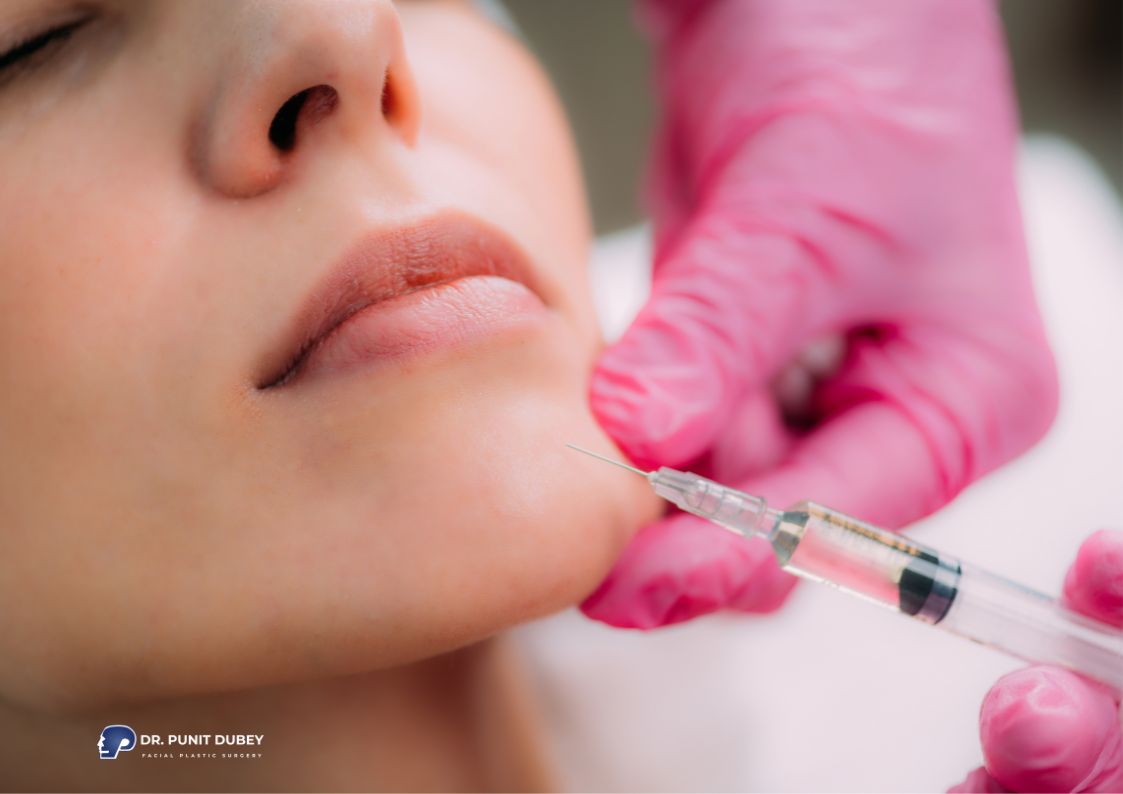
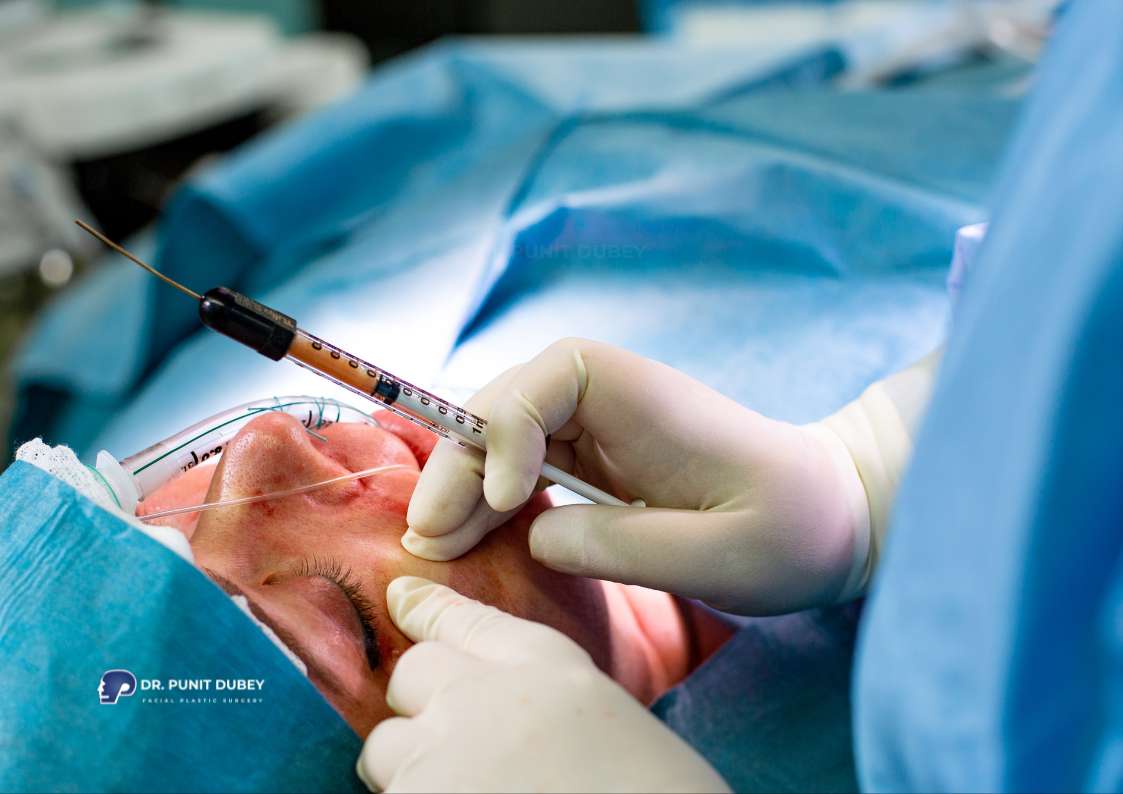
Process of Chin Filler in Delhi by Dr. Punit Dubey – Sculpt Your Chin and Jawline
Explore the step-by-step process of chin filler treatment in Delhi by Dr. Punit Dubey, designed to enhance chin contours and improve facial harmony.


Used correctly, fillers can:

  • Improve mild volume differences
  • Enhance contour symmetry
  • Support structural points subtly

Used incorrectly, they:

  • Make the face look heavier
  • Exaggerate imbalance
  • Create an artificial appearance

The key is not how much is injected.

It’s where and why.

Not volume — structure.
Not more — better placed.

For example:

  • A slightly flatter cheek can be supported
  • A minor chin deviation can be visually centered
  • Subtle jawline imbalance can be refined

But this only works when:

  • The underlying skeleton is reasonably balanced
  • The asymmetry is mild to moderate

2. Neuromodulators: Correcting Muscle Imbalance


Some asymmetries are not structural—they are functional.

In these cases, neuromodulators/toxins can help by:

  • Relaxing overactive muscles
  • Balancing pull between both sides
  • Improving symmetry in expressions

This is especially useful for:

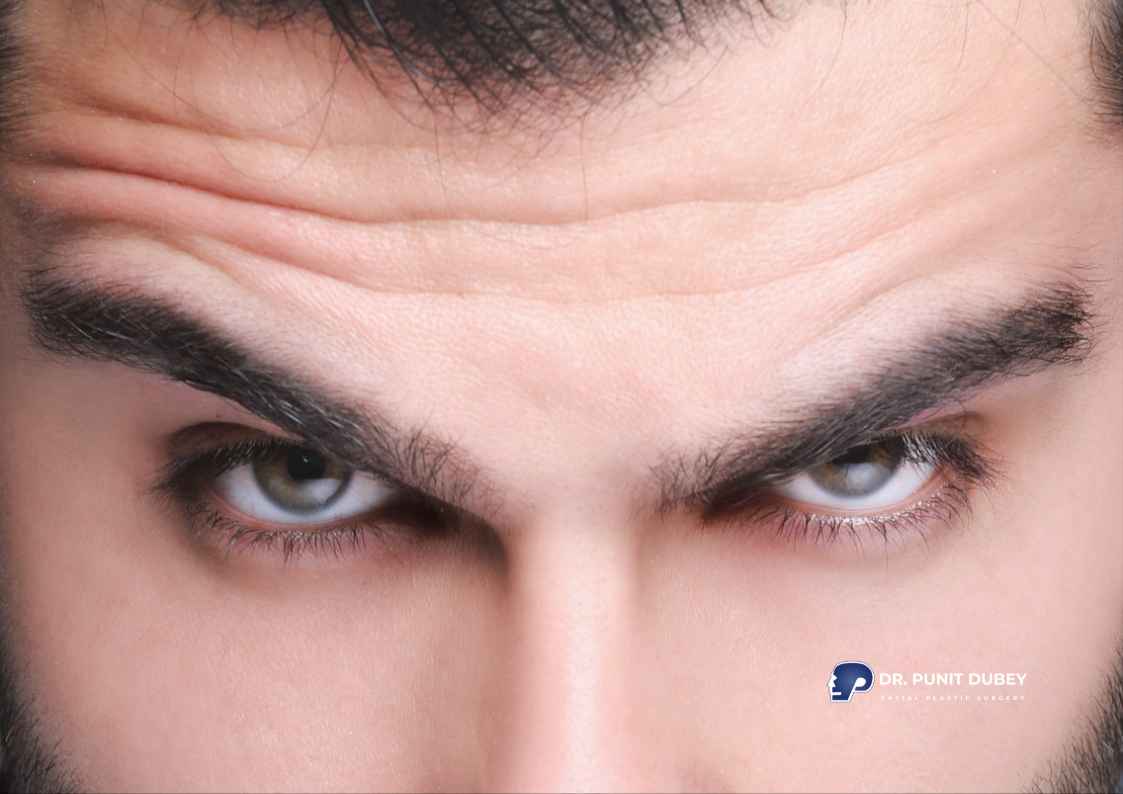
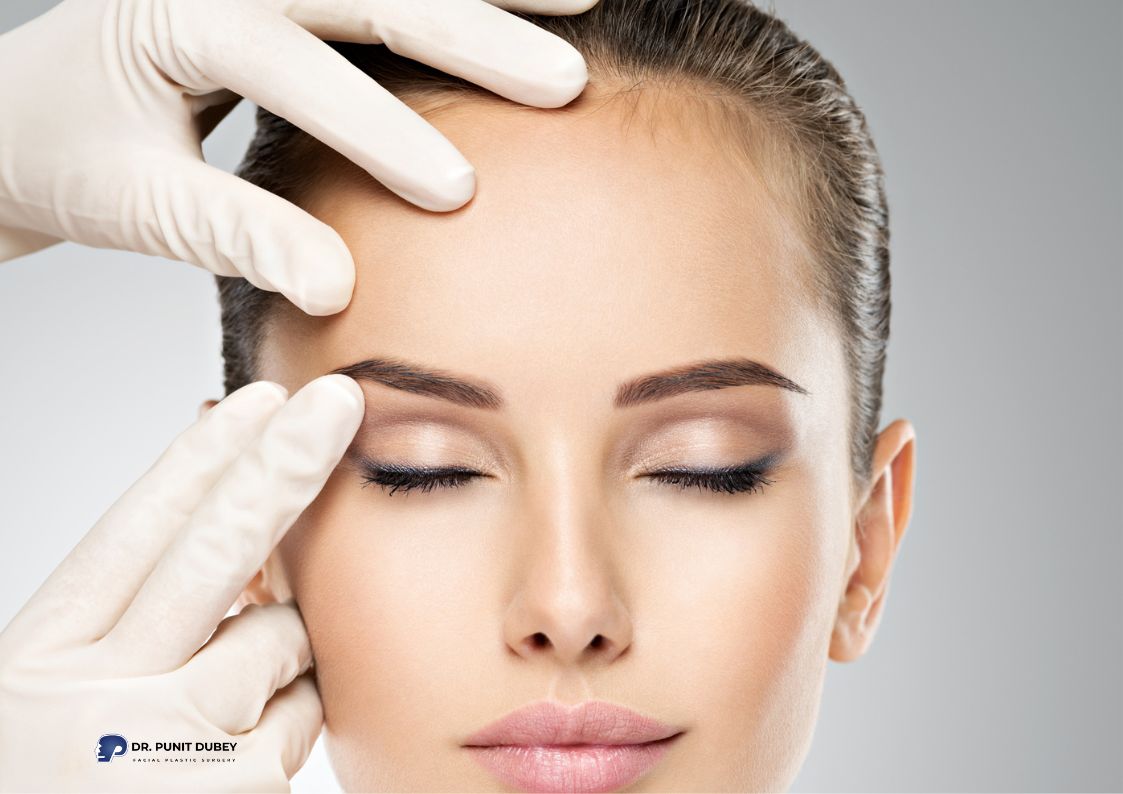
Forehead wrinkles treatment in India by Dr. Punit Dubey - Expert anti wrinkle injections
Erase fine lines and deep forehead creases with expert wrinkles treatments in India by Dr. Punit Dubey.


However:

Neuromodulators does not change:

  • Bone
  • Volume
  • Structural alignment

It refines movement—not form.

3. Fat Grafting: Natural Volume with Regenerative Benefit


Facial Fat grafting sits between surgical and non-surgical.

It uses your own tissue to:

  • Restore volume
  • Improve contour
  • Enhance skin quality

In asymmetry cases, it can:

  • Correct subtle hollowness
  • Improve contour transitions
  • Blend uneven areas more naturally

Compared to fillers:

  • It can be longer-lasting
  • It integrates more organically
Expert facial fat grafting in India by Dr. Punit Dubey – natural volume restoration for a youthful look.
Experience the transformative benefits of facial fat grafting in Delhi with Dr. Punit Dubey, restoring volume and rejuvenating your facial profile.


But it still follows the same rule:

If the problem is structural, volume alone is not the solution.

4. When Non-Surgical Treatment Works Best


Non surgical correction is ideal when:

  • Asymmetry is mild
  • The issue is primarily volume-related
  • There is no significant jaw or chin deviation
  • The patient wants minimal downtime
  • The goal is refinement, not transformation

In these patients, results can be:

  • Subtle
  • Natural
  • Visibly balanced

5. The Limitations Most Clinics Don’t Talk About


This is where honesty matters.

Non-surgical treatments:

  • Are temporary
  • Often require maintenance
  • Do not correct underlying skeletal imbalance

And the biggest risk?

Overcorrection.

Trying to “match both sides” with filler often leads to:

  • Bulkiness
  • Loss of definition
  • A face that looks heavier—not more balanced

The Real Role of Non-Surgical Treatments

They are not a universal solution.

They are a tool for refinement.

They can improve asymmetry.
But they cannot redefine structure.

And knowing that difference is what separates:

  • Temporary improvement
    from
  • Thoughtful, lasting correction

How to Fix Asymmetrical Face Permanently (Surgical Solutions)

There’s a point where refinement is no longer enough.

When facial asymmetry is structural—
when the imbalance begins in bone—
non-surgical treatments can only mask, not correct.

This is where surgery becomes not aggressive,
but precise and logical.

Because surgical correction is not about changing the face.

It’s about realigning what is already there.

1. Chin Surgery (Genioplasty): The Most Underrated Correction

If there is one procedure that quietly transforms facial balance,
it is genioplasty.
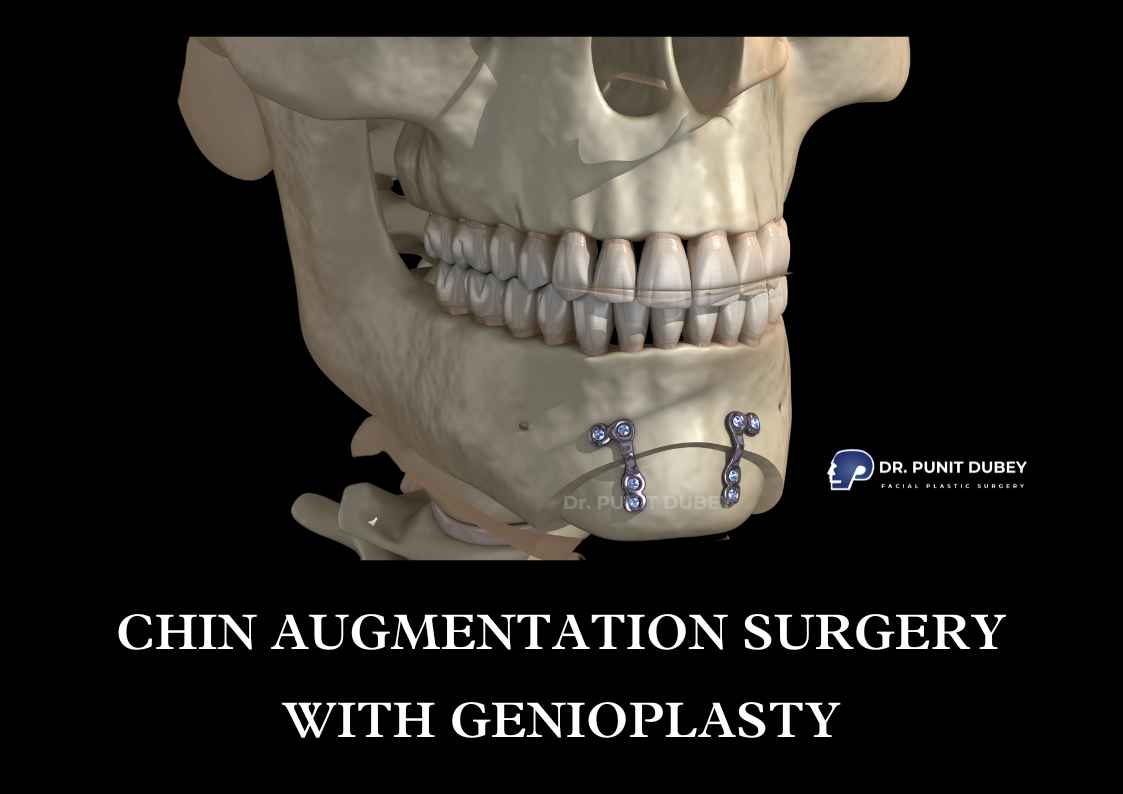
Chin Augmentation Surgery in India – Define Your Profile with Precision genioplasty or chin implants.
Achieve a stronger, more defined lower face with chin augmentation surgery tailored to your facial structure.

.

The chin sits at the center of the lower face.
Even a small deviation can affect:

  • Jawline symmetry
  • Lip alignment
  • Overall facial midline

In many patients, what appears to be:

  • Jaw asymmetry
  • Uneven lower face

…is actually driven by chin deviation or chin asymmetry.

Genioplasty allows us to:

  • Reposition the chin in three dimensions
  • Correct midline shift
  • Improve symmetry without adding bulk

And importantly:

It is not an implant.
It is your own bone—repositioned.

This makes the result:

  • Natural
  • Stable
  • Structurally accurate

In the right patient, correcting the chin alone can bring the entire face back into balance.

2. Jaw Surgery (Orthognathic Surgery): True Structural Correction

When facial asymmetry involves the jaw itself,
the correction must address the jaw.

This is where orthognathic surgery becomes essential.
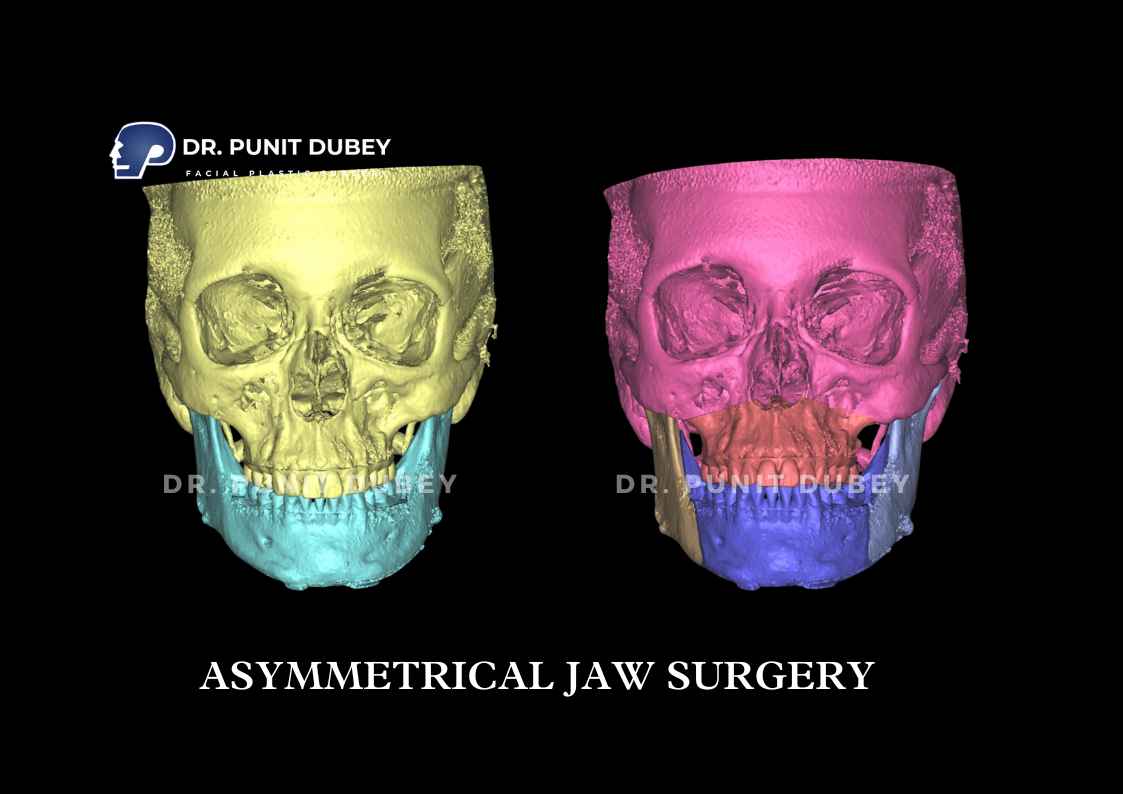
Orthognathic Surgery Before and After in Delhi by Dr. Punit Dubey
Before and after orthognathic surgery in Delhi by Dr. Punit Dubey in India, demonstrating improved jaw position and enhanced facial harmony.


It is often misunderstood as extreme.
In reality, it is one of the most precise, planned, and transformative procedures in facial surgery.

It allows us to:

  • Correct jaw length discrepancies
  • Realign facial midline
  • Balance the lower third of the face
  • Improve both function and aesthetics

Many patients with:

  • Visible facial asymmetry
  • Bite issues
  • Chin deviation

…actually, have an underlying jaw imbalance.

And unless that is corrected:

Everything else becomes compensation.

The difference after proper jaw correction is not just jaw symmetry.

It’s:

  • Stability
  • Proportion
  • Harmony

And often—improved breathing, bite, and function.

3. Rhinoplasty: Aligning the Center of the Face

The nose sits at the visual center.

Even a mild deviation can exaggerate asymmetry elsewhere.

Rhinoplasty surgery in facial asymmetry cases is not just about shape of nose.

It’s about:

  • Aligning the nose with the facial midline
  • Reducing visual imbalance
  • Improving overall facial harmony
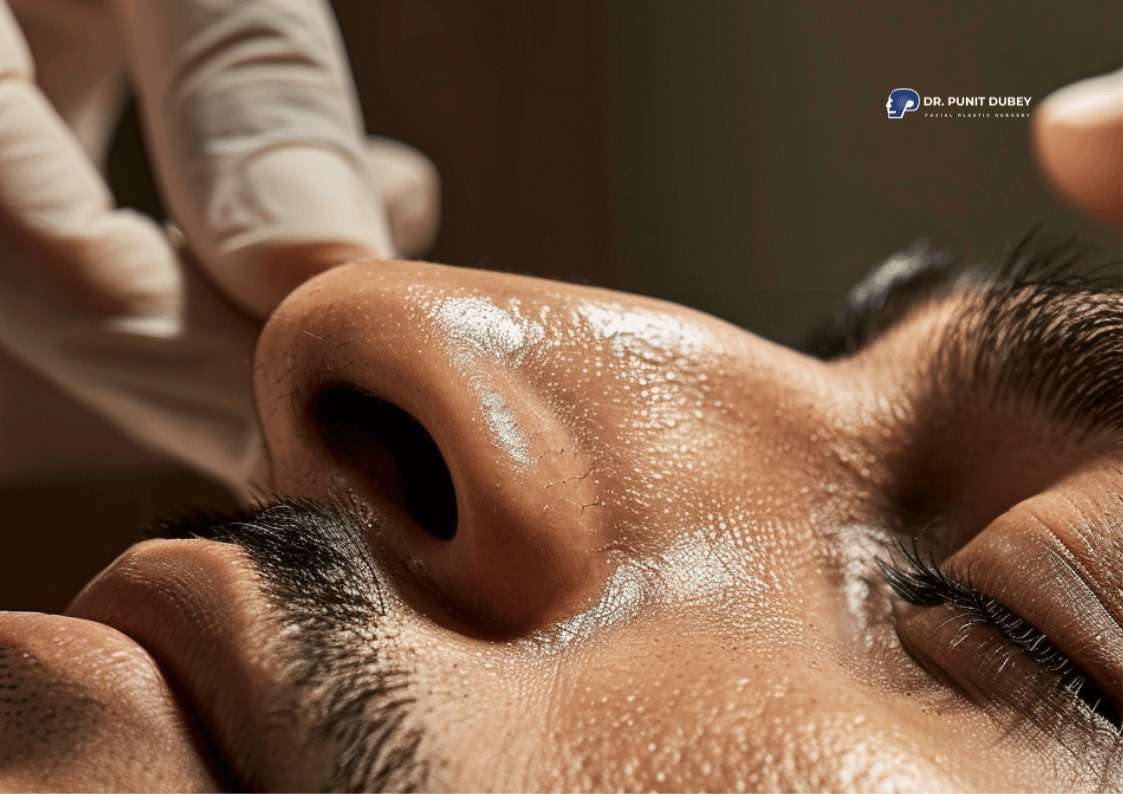
Step-by-step rhinoplasty surgery process in Delhi with Dr. Punit Dubey.
Discover the detailed process of rhinoplasty surgery with Dr. Punit Dubey in Delhi, from consultation to recovery.

However:

A straight nose alone does not fix an asymmetrical face.

It works best as part of a combined structural plan.

4. Eyelid & Brow Asymmetry Correction

Subtle differences in:

  • Eyelid height
  • Brow position

…can significantly affect how balanced the face appears.

These can be corrected through:

Brow Lift Surgery in Delhi – Achieve a Rejuvenated and Youthful Eyebrow
A brow lift in Delhi can lift sagging brows, reduce forehead wrinkles, and restore a youthful appearance.


But these are refinement procedures.

They improve symmetry in the upper face—but do not address deeper structural imbalance.

5. Facelift & Soft Tissue Repositioning (Aging Asymmetry)

With age, asymmetry often becomes more visible.

Not because structure changes—but because:

  • Soft tissue descends unevenly
  • Volume shifts differently on each side
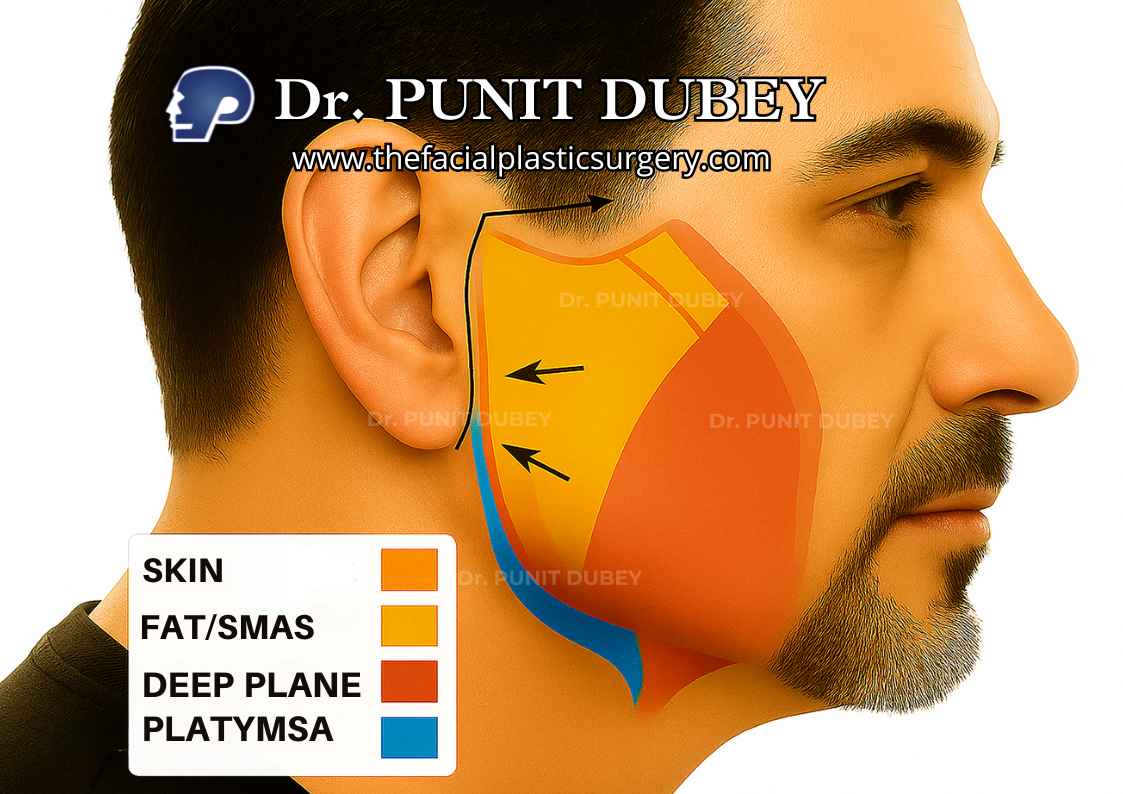
What is a Deep Plane Face Lift Surgery – Explained by Dr. Punit Dubey
Deep Plane Facelift Surgery lifts deeper facial tissues, not just the skin – for longer-lasting, youthful results.

In these cases, procedures like:

help by:

  • Repositioning—not tightening
  • Restoring symmetry through natural tissue movement

Not pulling — repositioning.
Not tightening — restoring.

6. Facial Implants for Structural Deficiency

Not all asymmetry comes from excessive structure.

Sometimes the issue is deficiency.

One cheek may appear flatter.
The jawline may lack support on one side.
The chin projection may be weaker asymmetrically.

This is where facial implants become important.

Common Facial Implants Used in Asymmetry Correction

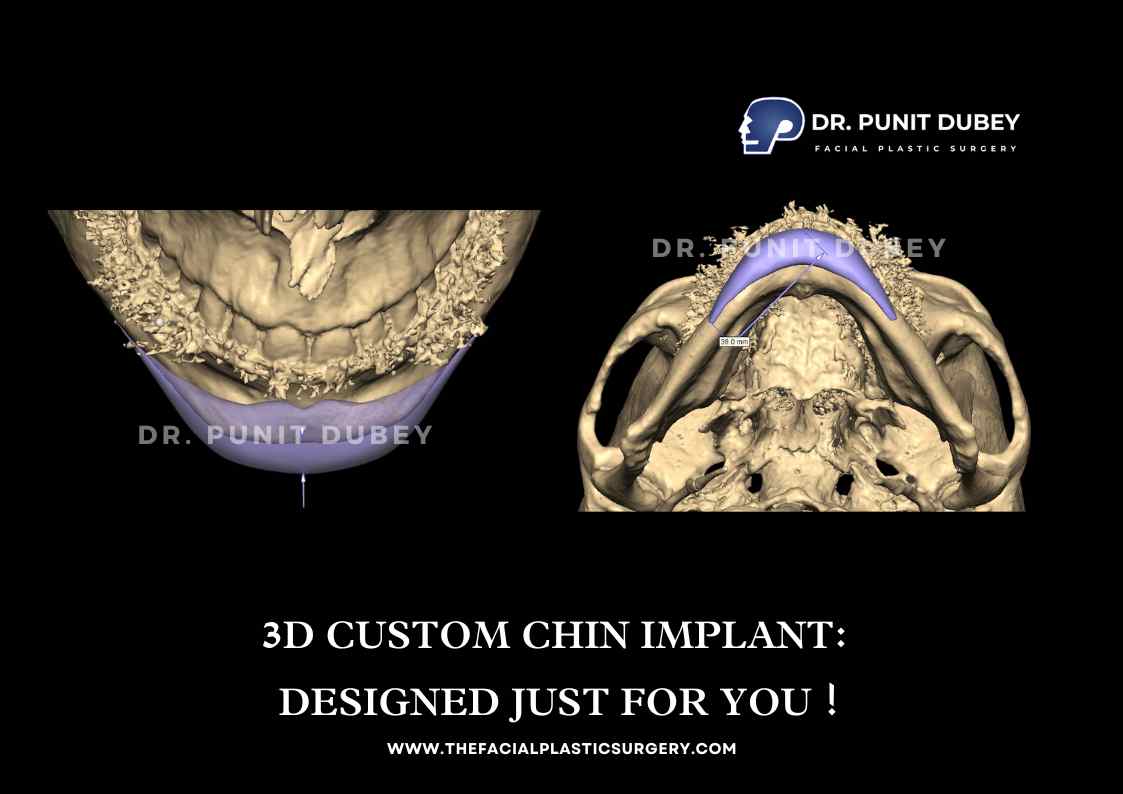
1. Chin Implants

Used for:

  • mild chin deviation
  • projection deficiency
  • lower facial imbalance
Before and After Chin Implant in India by Dr. Punit Dubey
Before and after chin implant surgery in Delhi by Dr. Punit Dubey, showcasing a refined chin and improved facial proportions.


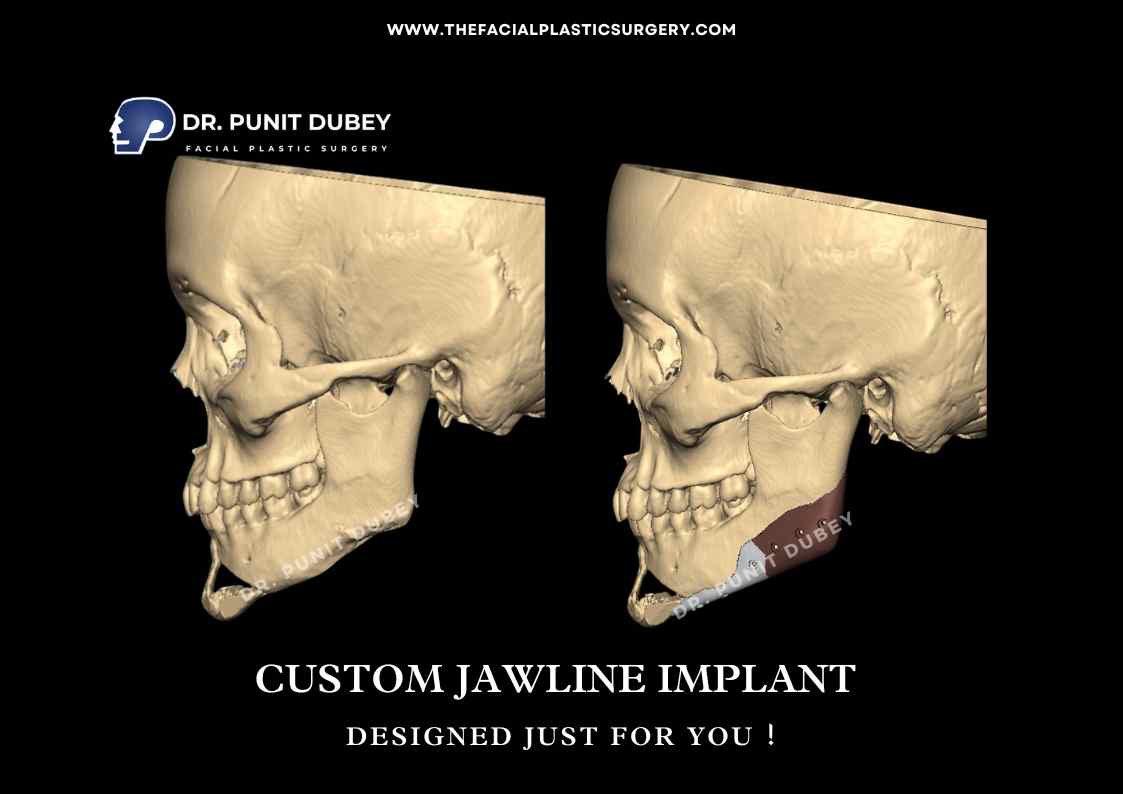
2. Jaw Implants

Helpful when:

  • one jaw angle is underdeveloped
  • mandibular width differs significantly
  • facial width appears uneven
Jaw Implant Before and After in India by Dr. Punit Dubey
Before and after jaw implant surgery in Delhi by Dr. Punit Dubey, showcasing enhanced jawline structure and improved facial balance.


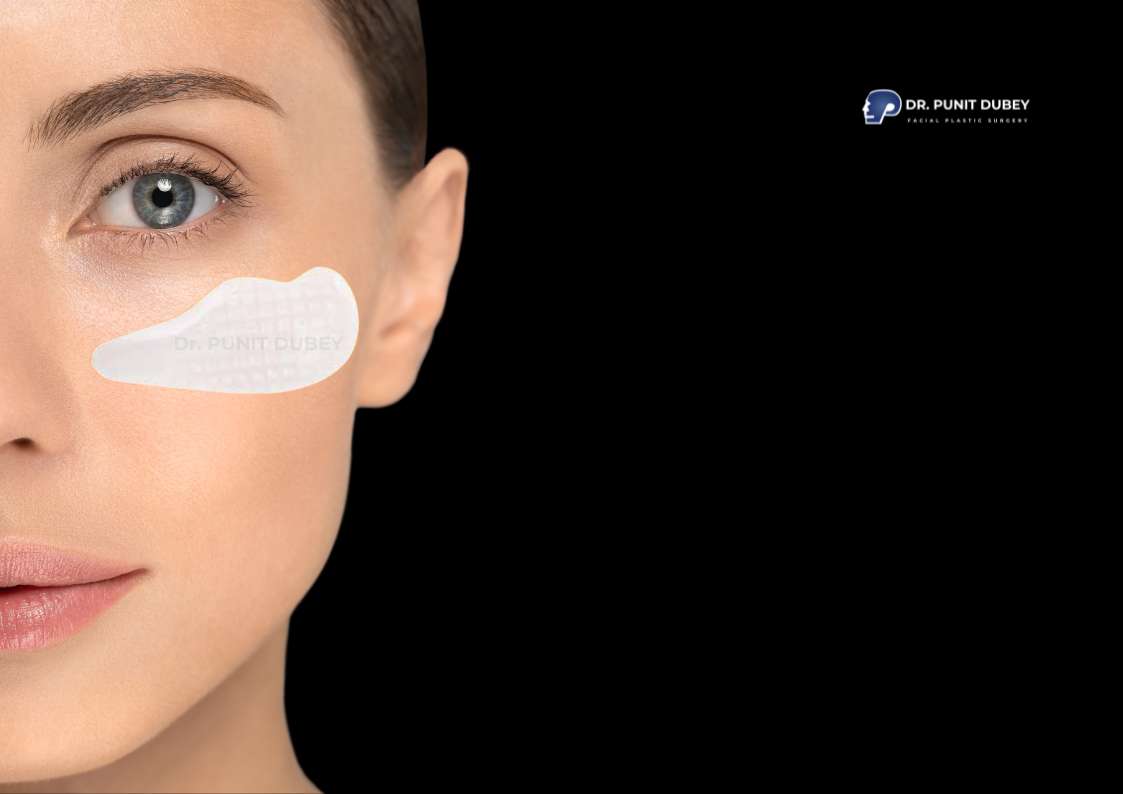
3. Cheek Implants

Can improve:

  • midface asymmetry
  • cheek projection imbalance
  • hollow or flattened contours
Expert cheek implant Surgery in India by Dr. Punit Dubey – customized facial rejuvenation for enhanced midface volume.
Experience personalized cheek implant surgery in India, offering tailored solutions to restore midface volume and achieve a refined, youthful look.


Custom Facial Implants

Custom facial implants may be created using:

  • CT scans
  • 3D planning
  • digital facial analysis

This allows millimeter-level precision tailored to the individual face.

The difference is significant.

Standard implants add volume.

Custom implants restore architecture.

7. Lip Asymmetry Correction

Lip asymmetry may involve:

  • uneven upper lip height
  • asymmetric cupid’s bow
  • lower lip imbalance
  • muscular pull differences
  • asymmetry during smiling

Depending on the cause, correction may involve:

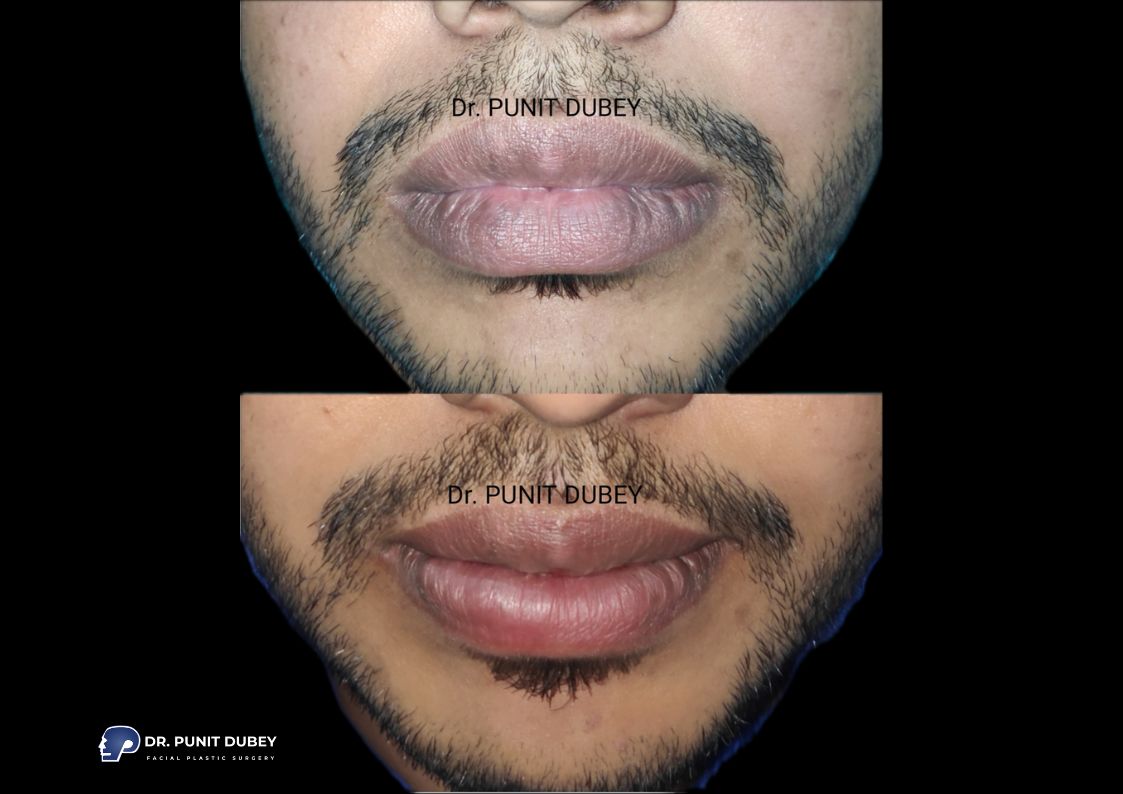
Before and After Lip Reduction Surgery - See the Enhanced Lip Shape and Proportional Balance
Explore the lip reduction surgery before and after images by Dr. PUNIT DUBEY to see the enhanced lip contour and proportional balance achieved through the procedure.


Most importantly:
the lips should remain expressive.

Natural movement matters more than rigid symmetry.

8. Ear Asymmetry & Facial Balance

Ears are rarely discussed in facial harmony conversations, yet they significantly affect perceived balance.

Differences in:

  • ear projection
  • height
  • rotation
  • shape

can subtly influence overall facial proportions.

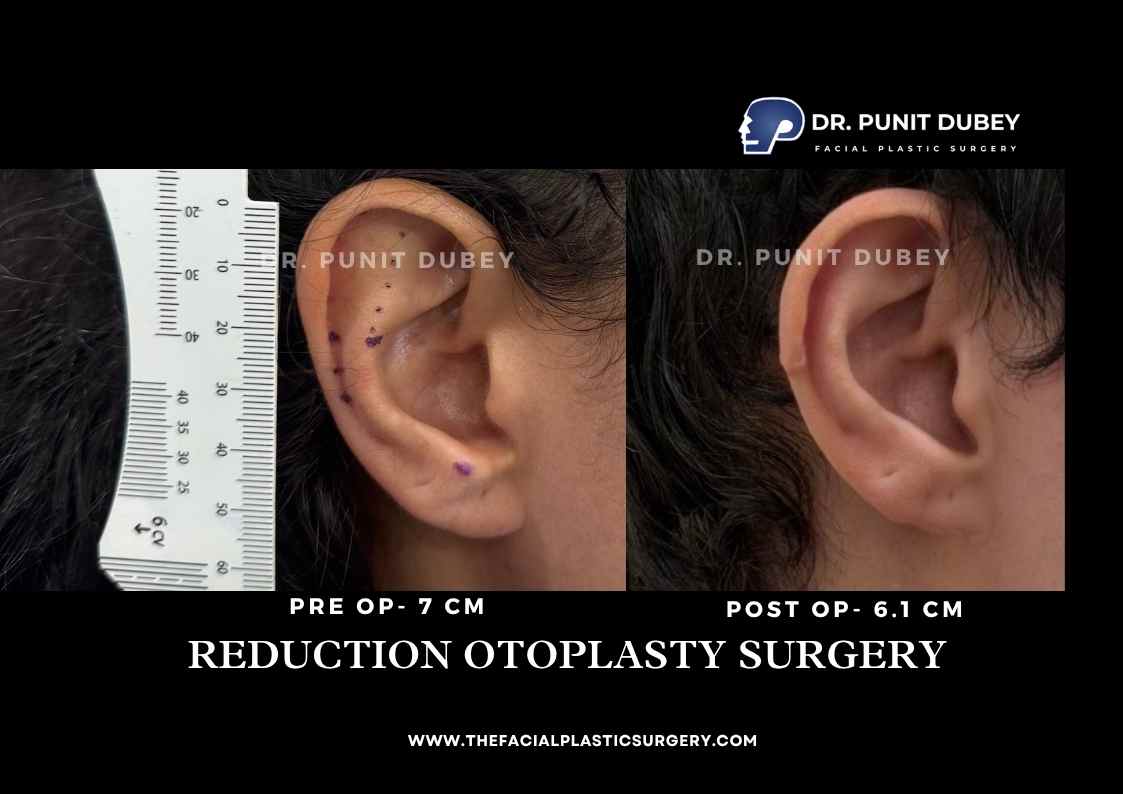
Procedures such as otoplasty or ear reshaping, protruding ears surgery may improve:

  • side-profile balance
  • craniofacial proportion
  • facial symmetry in photographs
Otoplasty Before and After in Delhi by Dr. Punit Dubey
Before and after otoplasty surgery in India by Dr. Punit Dubey, showcasing refined ear shape and improved facial symmetry.


Especially in profile-dominant asymmetry.

Why Surgery Is the Definitive Solution in Structural Facial Asymmetry

When the problem lies in:

  • Bone alignment
  • Jaw position
  • Chin deviation

Surgery is not optional—it is appropriate.

Because:

  • Fillers cannot reposition bone
  • Neuromodulators cannot correct skeletal imbalance
  • Surface treatments cannot realign structure

Surgery addresses the issue at its origin.

And when done correctly, the result is not:

  • Dramatic
  • Artificial
  • Overdone

It is simply:

A face that looks like it was always meant to be this way.

A Subtle but Important Truth

Not every asymmetrical face need surgery.

But every patient deserves to know:

  • When non-surgical is enough
  • And when it is only a temporary compromise

Because the goal is not to avoid surgery.

The goal is to choose the right level of correction.

Asymmetric face: Non-Surgical vs Surgical - Which One Do You Actually Need?

Most patients don’t struggle with options.
They struggle with clarity.

They’ve been told:

  • “Try fillers first”
  • “You don’t need surgery”
  • “Let’s balance it gradually”

And sometimes that’s reasonable.

But often, it’s avoidance of a more precise conversation.

Because the real question is not:

“What treatment is available?”

It is:

“Where is your asymmetry coming from?”

1. Non-Surgical Is Appropriate When


There is no significant structural deviation.

In these cases, the asymmetry is driven by:

  • Mild volume differences
  • Subtle contour imbalance
  • Muscle dominance

These patients typically present with:

  • Slight cheek asymmetry
  • Minor jawline unevenness
  • Soft tissue imbalance without midline shift

For them, non-surgical treatment can:

  • Refine
  • Balance
  • Improve perception

But understand this clearly:

Non-surgical treatment adjusts appearance.
It does not correct anatomy.

2. Surgical Correction Becomes Necessary When


There is a structural imbalance.

And this is where precision matters.

Key indicators include:

  • Chin deviating off the facial midline
  • Jaw asymmetry visible even at rest
  • Lower face appearing shifted to one side
  • Bite irregularities or occlusal imbalance
  • Persistent asymmetry despite fillers

These are not surface issues.

They are framework issues.

And when the framework is misaligned:

Surface treatments become compensation, not correction.

The Cost of Choosing the Wrong Approach

This is rarely discussed openly.

When a structural asymmetry is treated non-surgically:

  • Fillers are used repeatedly to “balance”
  • Volume builds over time
  • The face becomes heavier—not more symmetrical
  • The original imbalance is still present

The result?

A face that looks:

  • Fuller
  • Less defined
  • Still asymmetrical

But now more difficult to correct.

3. Temporary vs Definitive Results


This distinction should be made early—not after multiple treatments.

Non-surgical treatments:

  • Temporary
  • Maintenance-based
  • Best for refinement

Surgical correction:

  • Structural
  • Long-term
  • Addresses the cause

Neither is “better” in isolation.

But one is more appropriate, depending on the diagnosis.

The Surgeon’s Decision-Making Framework

In practice, the decision is not emotional.
It’s anatomical.

We assess:

  • Midline alignment (chin, nose, dental axis)
  • Jaw symmetry (length, projection, angle)
  • Volume distribution (fat compartments)
  • Dynamic movement (muscle influence)

Only then is a plan created.

Not based on:

  • Trends
  • Patient demand
  • Popular treatments

But on what the face actually needs.

A Simple Way to Understand It

If the asymmetry is:

  • Surface-level → refine it
  • Structural → correct it

Anything in between requires judgment.

And that judgment is what defines the outcome.

The Quiet Difference in Outcome

When the right approach is chosen:

  • The face looks balanced without appearing treated
  • The correction feels effortless
  • Nothing looks added or forced

When the wrong approach is chosen:

  • The imbalance persists
  • The face becomes heavier or artificial
  • The result feels incomplete

And patients sense it—even if they can’t explain it.

The Standard Should Be Higher

Not every asymmetry needs surgery.

But every patient deserves:

  • An accurate diagnosis
  • A clear explanation
  • A plan that matches anatomy—not convenience

Because in facial aesthetics:

The difference is not in the treatment.
It is in the thinking behind it.

Face Expert Insight: What Most People Get Completely Wrong About Asymmetrical Face

Most discussions around how to fix asymmetrical face are surprisingly shallow.

They focus on:

  • Fillers
  • Quick fixes
  • Surface-level balance

But they miss the central truth:

Facial asymmetry is not a volume problem.
It is a relationship problem between structures.

Myth 1: “More Filler Will Make Both Sides Equal”

This is the most common—and most damaging—approach.

Trying to match one side by adding volume to the other often leads to:

  • A heavier face
  • Blurred contours
  • Loss of natural definition

Because:

You cannot “fill” your way into symmetry when the structure is uneven.

Myth 2: “If It Looks Uneven, Treat That Area”

What you see is not always the source.

  • A cheek imbalance may originate in the jaw
  • A lip asymmetry may come from chin deviation
  • An eye difference may be influenced by brow position

Treating the visible area alone is like adjusting a mirror
instead of correcting what’s in front of it.

Myth 3: “Perfect Symmetry Is the Goal”

It isn’t.

Perfect symmetry often looks:

  • Flat
  • Artificial
  • Unnatural

The goal is not identical sides.

It is visual harmony.

Myth 4: “Non-Surgical Is Always Safer”

Safer does not always mean appropriate.

Repeated non-surgical treatments:

  • Add volume over time
  • Distort natural anatomy
  • Delay proper correction

Sometimes, a well-planned surgical correction is:

  • More precise
  • More controlled
  • More stable long-term

The Philosophy of Fixing Facial Asymmetry (Where Surgery Becomes Art)

There is a subtle shift that happens when asymmetry is corrected well.

The face does not look “done.”

It looks… right.

Not because it is perfectly symmetrical—
but because the relationships between features make sense.

Identity Preservation Over Transformation

The best results don’t change who you are.

They:

  • Refine
  • Align
  • Restore

Your face should still feel familiar—just more balanced.

Natural Over Obvious

When correction is done correctly:

  • No feature stands out
  • Nothing looks exaggerated
  • There is no visible “effort”

The result should not be noticed.
Only felt.

Precision Over Volume

Adding more is easy.

Correcting precisely is not.

This is why:

  • Overfilled faces are common
  • Truly balanced faces are rare

Because restraint requires understanding.

Harmony Over Perfection

The human eye is drawn to:

  • Flow
  • Proportion
  • Continuity

Not mathematical symmetry.

And this is why the goal is not to create a perfect face.

It is to create a coherent one.

Why Choose Facial Asymmetry Surgery in India with Dr. Punit Dubey?

Facial asymmetry is rarely caused by a single feature alone. True correction requires understanding the deeper relationship between the chin, jaw, cheeks, nose, forehead, and facial structure together.

At his practice in Delhi, Dr. Punit Dubey approaches facial asymmetry with a structural and highly individualized philosophy focused on:

  • natural-looking refinement
  • skeletal harmony
  • precision over overcorrection
  • preservation of identity

Advanced treatments may include:

  • genioplasty
  • jaw surgery
  • facial implants
  • rhinoplasty
  • fat grafting
  • forehead contouring
  • deep plane facial procedures

International patients increasingly choose India for facial asymmetry surgery because of the combination of:

  • advanced surgical expertise
  • modern 3D planning technology
  • custom implant solutions
  • significantly lower costs compared to Western countries

It is to create a face that feels more harmonious, balanced, and naturally aligned.

Facial Asymmetry Surgery Cost in India (What Actually Matters)

When patients explore facial asymmetry surgery cost in India,
the numbers vary widely—and for good reason.
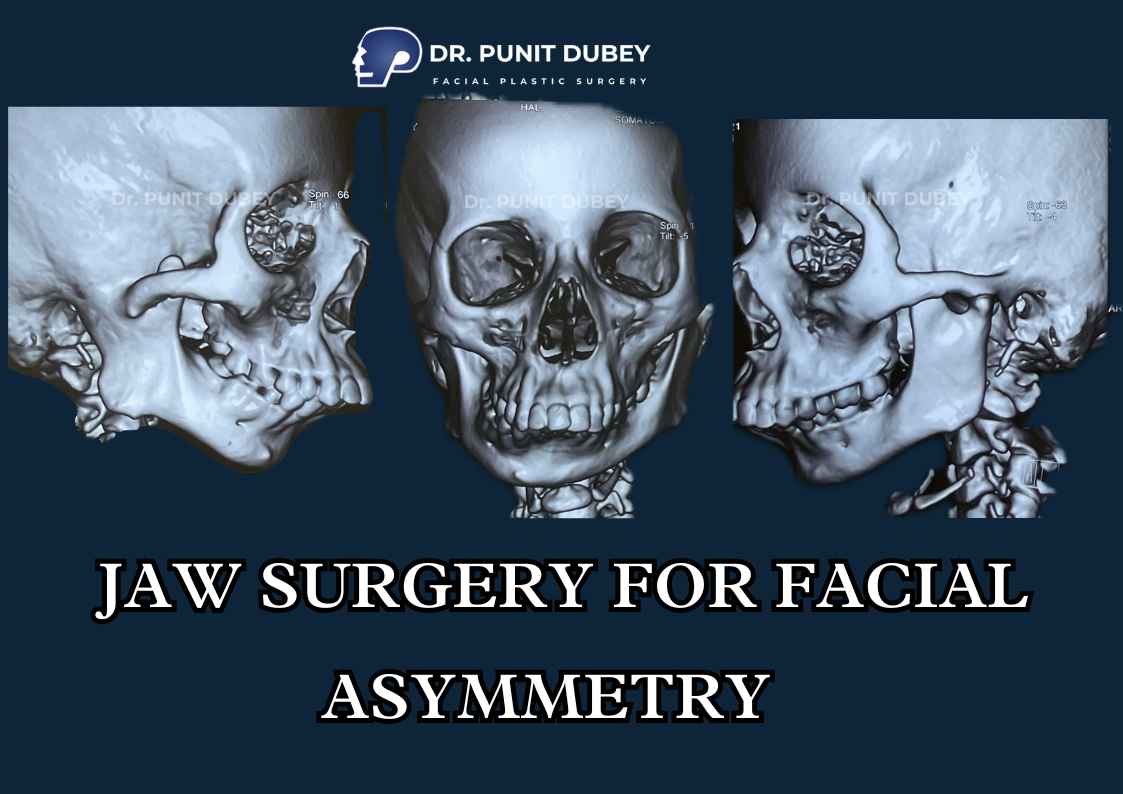
Facial Asymmetry Correction Cost in India – Customized Treatment with Dr. Punit Dubey.
Facial asymmetry correction in India ranges from ₹1 to ₹10 lakhs depending on the type of procedure and extent of imbalance.

Because the cost is not tied to a single procedure.

It depends on:

  • Type of asymmetry
  • Complexity of correction
  • Whether surgery involves bone, soft tissue, or both
  • Surgeon expertise and planning precision

Approximate Facial Asymmetry Cost Overview (India)

  • Genioplasty (chin correction): ₹1,20,000 – ₹3,50,000 ($1,450 – $4,200)
  • Jaw Surgery / Orthognathic Surgery: ₹4,00,000 – ₹10,00,000+ ($4,800 – $12,000+)
  • Rhinoplasty (if required): ₹1,50,000 – ₹4,00,000 ($1,800 – $4,800)
  • Facial Implants (chin / jaw / cheek): ₹1,00,000 – ₹6,00,000+ ($1,200 – $7,200+)
  • Custom 3D Facial Implants: ₹1,50,000 – ₹8,00,000+ ($1,800 – $9,600+)
  • Midface Lift / Cheek Lift: ₹1,80,000 – ₹2,50,000 ($2,150 – $3,000)
  • Deep Plane Facelift Surgery: Starting around ₹2,50,000+ ($3,000+)
  • Lip Asymmetry Correction Surgery: ₹40,000 – ₹1,50,000 ($480 – $1,800)
  • Otoplasty / Ear Asymmetry Correction: ₹40,000 – ₹2,00,000 ($480 – $2,400)
  • Forehead Contouring / Brow Bone Correction: ₹2,00,000 – ₹4,00,000+ ($2,400 – $4,800+)

Advanced Planning & Technology (Optional in Complex Cases)

  • 3D CT Planning & Surgical Simulation: ₹25,000 – ₹1,00,000 ($300 – $1,200)
  • Custom Surgical Guides / 3D Printing: ₹40,000 – ₹2,00,000+ ($480 – $2,400+)
  • Custom Titanium / PEEK Implants: Additional ₹40,000 – ₹5,00,000+ (Additional $480 – $6,000+)

These are broad ranges—not fixed prices.

What You Are Actually Paying For

Not just the procedure.

But:

  • Diagnosis
  • Planning
  • Execution
  • Precision

Because in asymmetry correction:

The difference is not in what is done.
It is in how accurately it is done.

Why Cost Alone Is a Poor Decision Metric

Choosing based on cost alone often leads to:

  • Over-treatment
  • Under-correction
  • Multiple revisions

And eventually—higher overall cost.

Precision upfront is always more efficient than correction later.

Final Thoughts: You Don’t Need a Perfect Face — You Need a Balanced One

Facial asymmetry is not a flaw.

It is a variation.

But when that variation disrupts balance,
it changes how the face is perceived—and often, how you feel about it.

How to fix asymmetrical face is not about:

  • Creating perfection
  • Changing identity
  • Following trends

It is about:

  • Understanding structure
  • Choosing the right level of correction
  • Respecting the natural architecture of the face

Because when done correctly:

Nothing looks artificial.
Nothing looks excessive.

It simply looks…right.

Learn more about facial asymmetry surgery in Delhi, India by Dr. Punit Dubey

Share this article

Picture of Dr. PUNIT DUBEY

Dr. PUNIT DUBEY

International Board Certified
Cranio-Maxillo-Facial Surgeon &
Facial Plastic Surgeon
New Delhi - India

info@thefacialplasticsurgery.com

SCHEDULE

AN APPOINTMENT

SCHEDULE

AN APPOINTMENT
Schedule Now
Protruding ears surgery cost in Delhi ₹60,000–₹90,000 Prominent ear surgery in India by Dr. Punit Dubey in 2026
Protruding Ears Surgery Cost in India
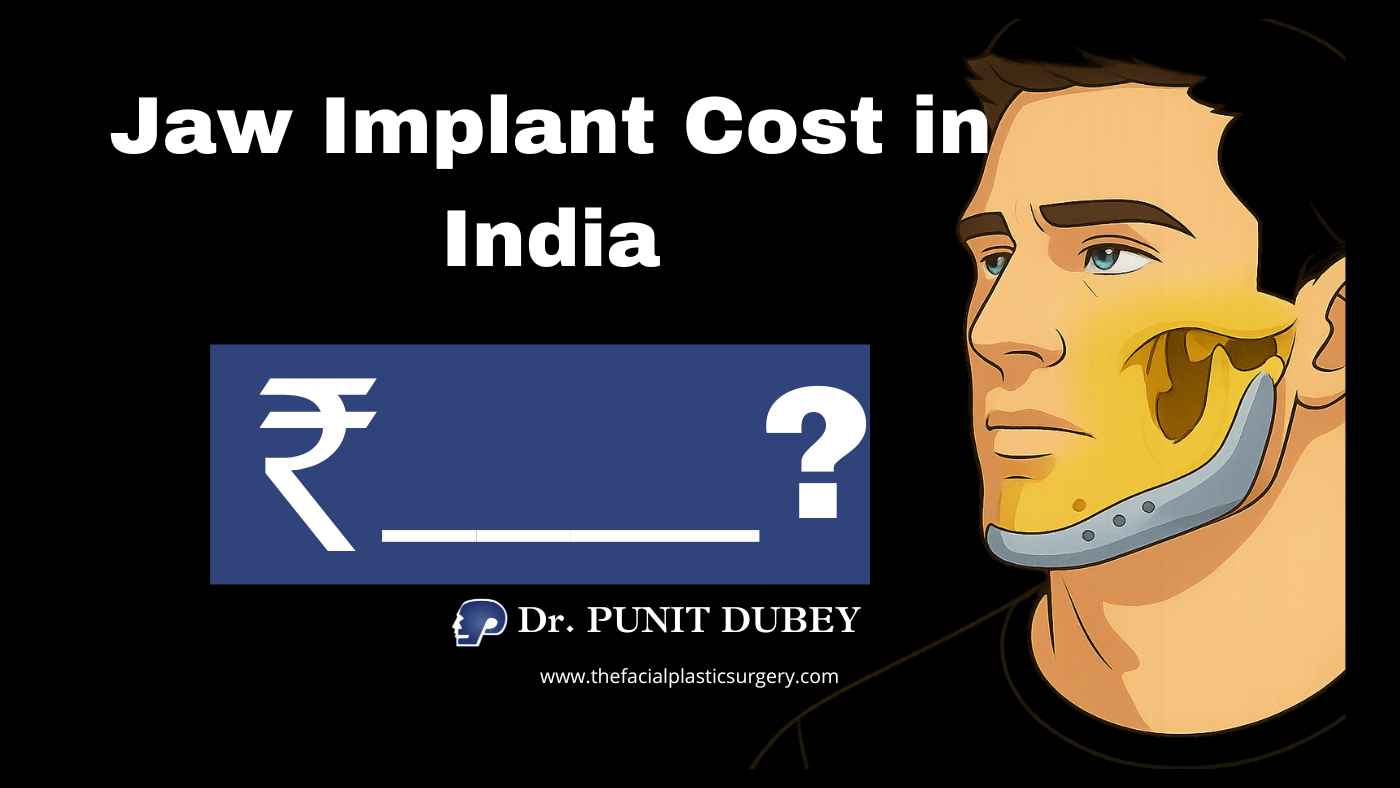
Jaw Implant Cost in Delhi (2026) – ₹90K to ₹3L by facial implant expert in India Dr. Punit Dubey
Jaw Implant Cost in India
Double Chin Removal Cost in Delhi (2026) – ₹40K–₹3.5L Premium Neck Contouring in India by Dr. Punit Dubey
Double Chin Removal Cost in India
Midface lift cost in Delhi 2026 – Affordable cheek lift surgery cost in Delhi by Dr. Punit Dubey
Midface Lift Cost in India
Chin Augmentation Cost in Delhi (2026) – Chin Augmentation in India by Dr. Punit Dubey starting from ₹25,000
Chin Augmentation Cost in India
Buccal fat removal cost in Delhi 2026– defined cheeks by Dr. Punit Dubey, cost ₹30,000–₹50,000.
Buccal Fat Removal Cost in India
Scroll to Top