The Simple Definition
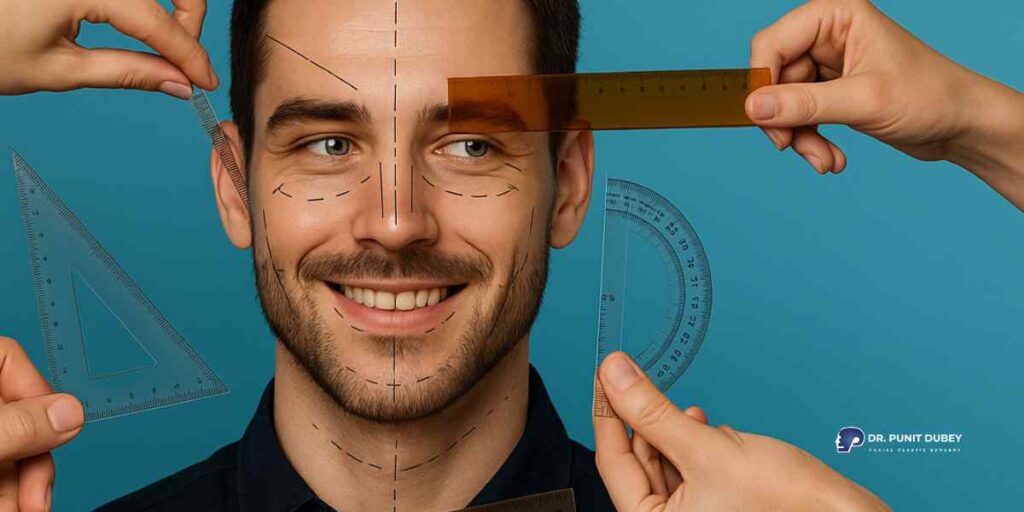
Facial asymmetry refers to a difference in balance or proportion between the two sides of the face, where one side does not perfectly mirror the other.
That could involve:
- Jaw position
- Chin alignment
- Cheek volume
- Eyelid height
- Eyebrow position
- Nose deviation
- Ears
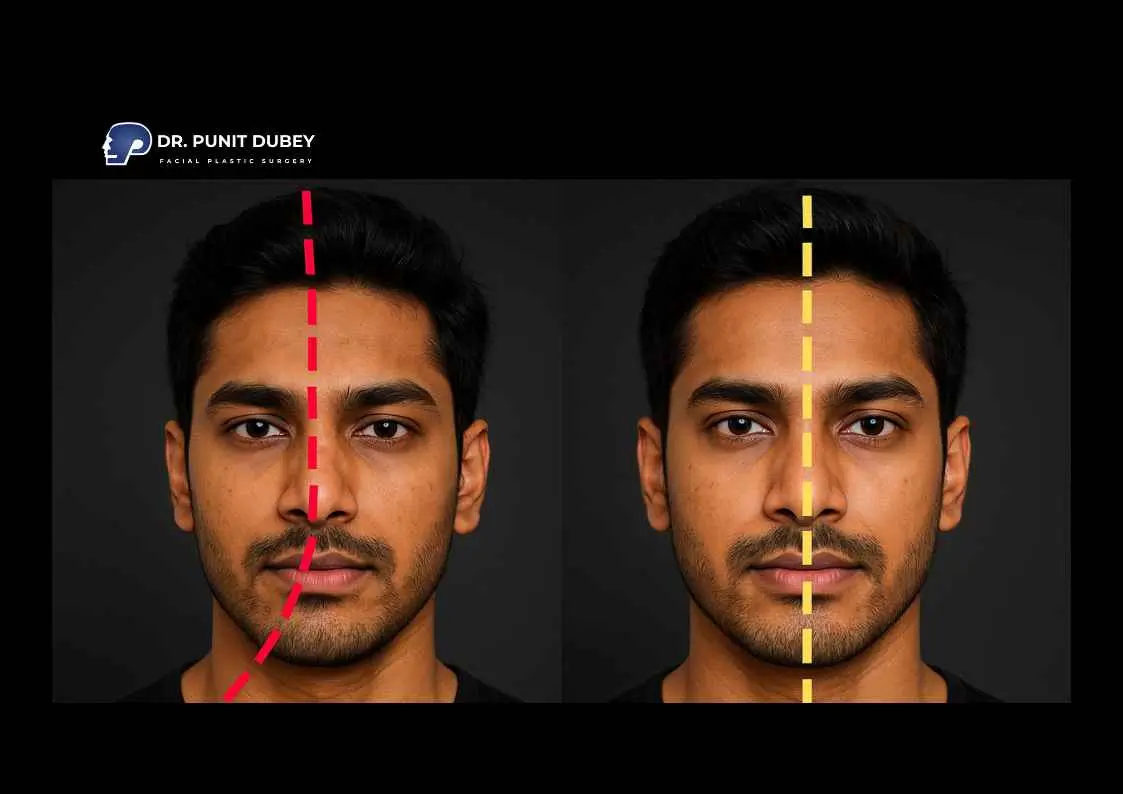
In natural human anatomy, a certain level of facial asymmetry exists in virtually every individual.
It’s normal. It’s human.
The Difference Between Normal vs Noticeable Facial Asymmetry
Here’s where it becomes clinically relevant:
Normal asymmetry:
- Subtle differences
- Not easily noticeable
- Doesn’t affect overall facial harmony
Noticeable asymmetry:
- One side appears heavier, lower, or more prominent
- Chin or jaw deviates off-centre
- Eyes or brows look uneven
- Becomes more obvious in photos or videos
The shift from “normal” to “noticeable” isn’t about measurement.
It’s about perception.
Asymmetrical Face vs Symmetrical Face
There’s a common misconception that a perfectly symmetrical face is the ideal.
It isn’t.
In fact, perfectly mirrored faces often look artificial.
What the eye actually finds attractive is:
- Balance
- Proportion
- Continuity of lines
Not perfect symmetry.
This is why, in practice, we don’t aim to make both sides identical.
We aim to make the face feel visually harmonious.
Why This Distinction Matters
If you misunderstand the problem,
you’ll choose the wrong treatment.
- Treating asymmetry as a “volume problem” → leads to overfilling
- Treating a structural issue with surface treatments → leads to temporary or unnatural results
And this is where most people go wrong.
Because an asymmetrical face is not a single problem.
It’s a multi-layered condition.
When someone searches how to fix asymmetrical face, the instinct is to look for a solution.
But before treatment comes something far more important:
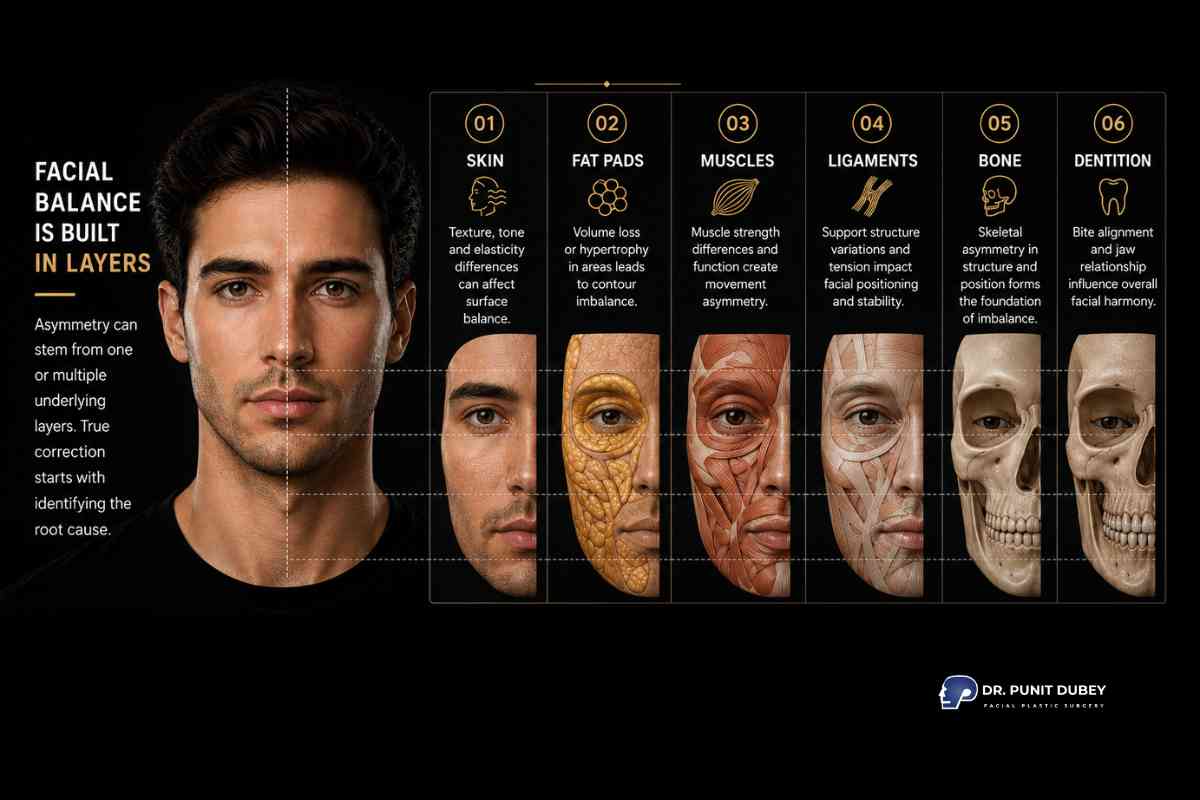
Diagnosis.
Because facial asymmetry is not a single condition.
It’s a result of different layers behaving differently on each side.
Unless the exact anatomical layer causing the imbalance is identified, any treatment is likely to feel partial or incomplete.
1. Structural Causes (Bone & Jaw)
This is where most true asymmetry begins.
The face is built on a skeletal framework.
If that foundation is off—even slightly—the imbalance shows everywhere else.
Common structural causes include:
- Jaw asymmetry (one side longer, wider, or rotated)
- Chin deviation (a slight shift of the chin away from the facial midline that can significantly influence facial symmetry and visual proportion)
- Midface skeletal imbalance
- Developmental asymmetry from growth patterns
Here’s what most people miss:
What looks like a “cheek problem” is often a jaw problem.
What looks like “uneven volume” may actually be bone asymmetry.
And no amount of filler can truly correct that.
2. Soft Tissue Causes (Fat & Volume)
This is often the stage where facial imbalance gradually becomes more noticeable as the years progress.
Even with a balanced skeleton, the soft tissue layer can create asymmetry.
This includes:
- Uneven fat distribution
- Volume loss on one side (often with aging)
- Subtle differences in skin thickness or elasticity
In these cases:
- One side may look flatter
- The other may look fuller or heavier
This is where non-surgical treatments can play a role—
but only when the underlying structure supports it.
3. Muscle & Functional Causes
Movement creates asymmetry over time.
The face is dynamic. It moves constantly.
And over years, small habits create visible differences:
- Favouring one side while chewing
- Dominant facial expressions
- Stronger muscle pulls on one side
- Subtle nerve-related variations
This can lead to:
- One eyebrow sitting higher
- One side of the mouth pulling more
- Slight facial tilt during expression
4. Aging & Gravity
Time rarely affects both sides equally.
One of the most overlooked causes of asymmetrical face is aging asymmetry.
As we age:
- Fat compartments shrink or descend
- Ligaments loosen
- Skin laxity increases
But not uniformly.
So one side may:
- Drop earlier
- Lose volume faster
- Develop deeper folds
This creates the feeling that:
And often, that’s exactly what’s happening.
5. Dental, Bite & Functional Imbalance
The hidden contributor.
Many facial asymmetries are linked to:
- Bite misalignment (malocclusion)
- Dental shifts
- TMJ-related changes
These affect:
- Jaw position
- Chin alignment
- Lower face symmetry
And this is why, in some patients, the solution isn’t cosmetic alone—
its functional correction combined with aesthetic refinement.
6. Trauma or Previous Procedures
Sometimes facial asymmetry is acquired.
Past events can alter facial balance:
- Injury or facial fractures
- Scar tissue
- Previous surgery
- Overfilled or poorly placed fillers
These cases require a different approach:
- Not just enhancement
- But correction and restoration
The Key Insight Most People Miss
Facial asymmetry is rarely about one problem.
It’s usually a combination of:
- Structure
- Volume
- Movement
- Time
And this is why a single solution rarely works.
The mistake is treating what you see—
instead of understanding what’s causing it.
Not every asymmetrical face need surgery.
In carefully selected patients, non-surgical treatments can create remarkable improvement—
but only when used with restraint and understanding.
This is where many treatments go wrong.
Because non-surgical correction is not about:
- Adding volume
- Filling everything evenly
It’s about:
- Strategic adjustment
- Subtle balancing
- Respecting the underlying structure
1. Dermal Fillers: Balancing, Not Inflating
Fillers are the most commonly used tool for facial asymmetry.
But their role is often misunderstood.
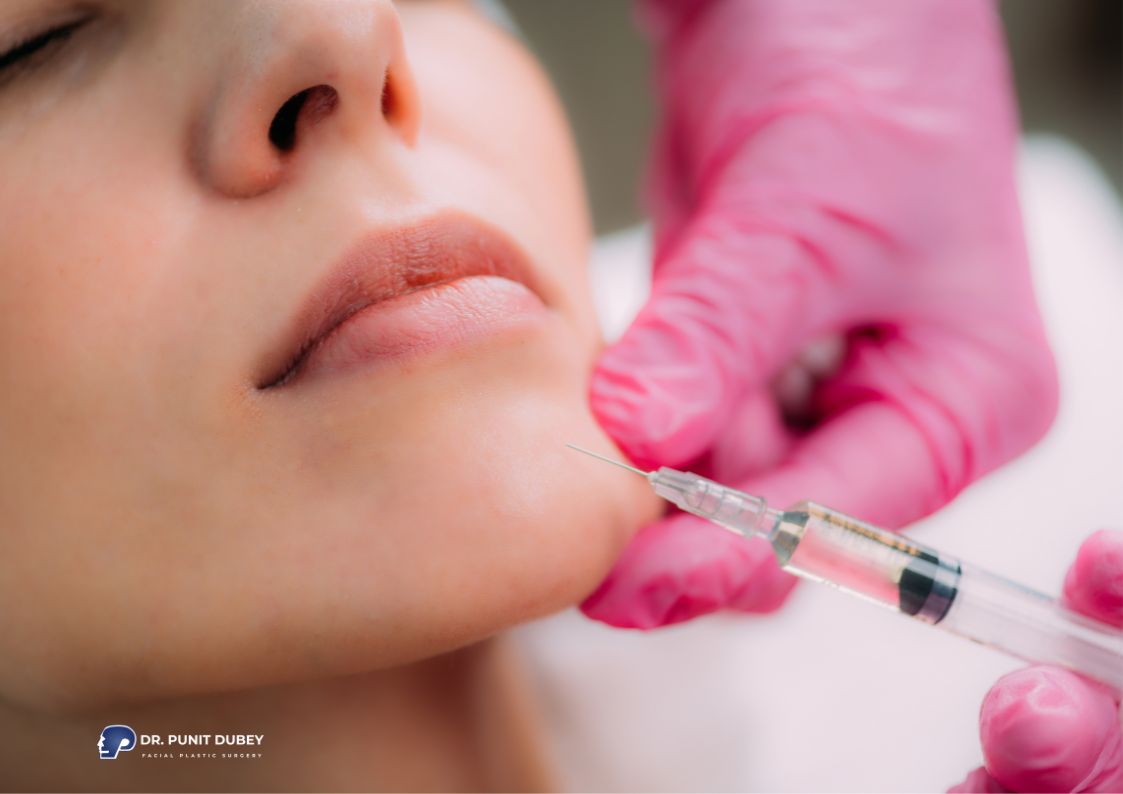
Used correctly, fillers can:
- Improve mild volume differences
- Enhance contour symmetry
- Support structural points subtly
Used incorrectly, they:
- Make the face look heavier
- Exaggerate imbalance
- Create an artificial appearance
The key is not how much is injected.
It’s where and why.
Not volume — structure.
Not more — better placed.
For example:
- A slightly flatter cheek can be supported
- A minor chin deviation can be visually centered
- Subtle jawline imbalance can be refined
But this only works when:
- The underlying skeleton is reasonably balanced
- The asymmetry is mild to moderate
2. Neuromodulators: Correcting Muscle Imbalance
Some asymmetries are not structural—they are functional.
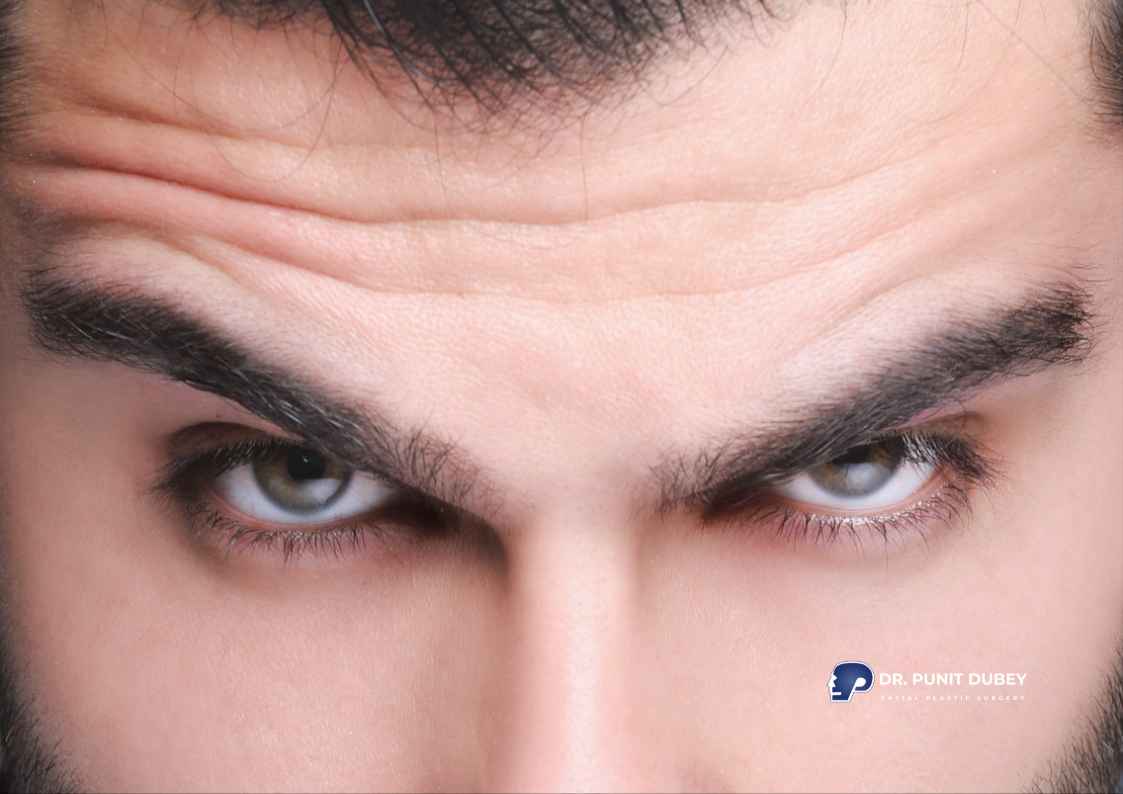
In these cases, neuromodulators/toxins can help by:
- Relaxing overactive muscles
- Balancing pull between both sides
- Improving symmetry in expressions
This is especially useful for:
- Uneven eyebrows
- Asymmetrical smile
- Lip pulls differences
- Forehead Wrinkles
However:
Neuromodulators does not change:
- Bone
- Volume
- Structural alignment
It refines movement—not form.
3. Fat Grafting: Natural Volume with Regenerative Benefit
Facial Fat grafting sits between surgical and non-surgical.
It uses your own tissue to:
- Restore volume
- Improve contour
- Enhance skin quality
In asymmetry cases, it can:
- Correct subtle hollowness
- Improve contour transitions
- Blend uneven areas more naturally
Compared to fillers:
- It can be longer-lasting
- It integrates more organically
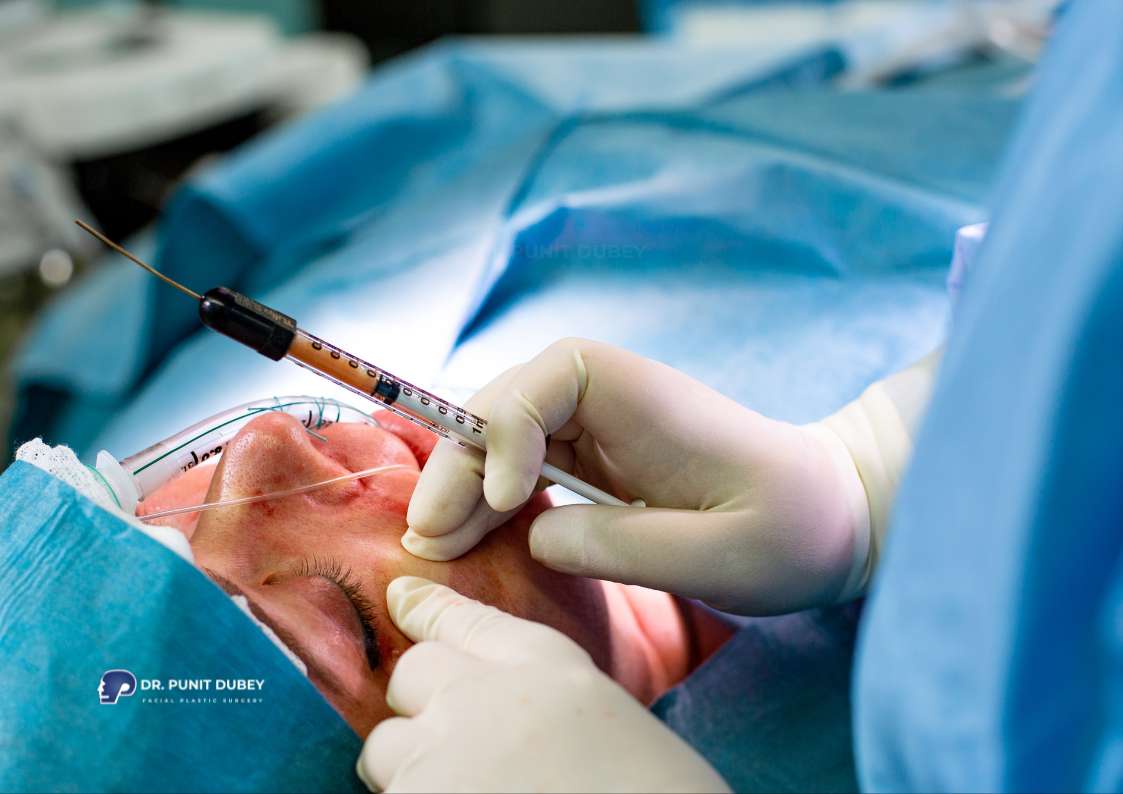
But it still follows the same rule:
If the problem is structural, volume alone is not the solution.
4. When Non-Surgical Treatment Works Best
Non surgical correction is ideal when:
- Asymmetry is mild
- The issue is primarily volume-related
- There is no significant jaw or chin deviation
- The patient wants minimal downtime
- The goal is refinement, not transformation
In these patients, results can be:
- Subtle
- Natural
- Visibly balanced
5. The Limitations Most Clinics Don’t Talk About
This is where honesty matters.
Non-surgical treatments:
- Are temporary
- Often require maintenance
- Do not correct underlying skeletal imbalance
And the biggest risk?
Overcorrection.
Trying to “match both sides” with filler often leads to:
- Bulkiness
- Loss of definition
- A face that looks heavier—not more balanced
The Real Role of Non-Surgical Treatments
They are not a universal solution.
They are a tool for refinement.
They can improve asymmetry.
But they cannot redefine structure.
And knowing that difference is what separates:
- Temporary improvement
from - Thoughtful, lasting correction
There’s a point where refinement is no longer enough.
When facial asymmetry is structural—
when the imbalance begins in bone—
non-surgical treatments can only mask, not correct.
This is where surgery becomes not aggressive,
but precise and logical.
Because surgical correction is not about changing the face.
It’s about realigning what is already there.
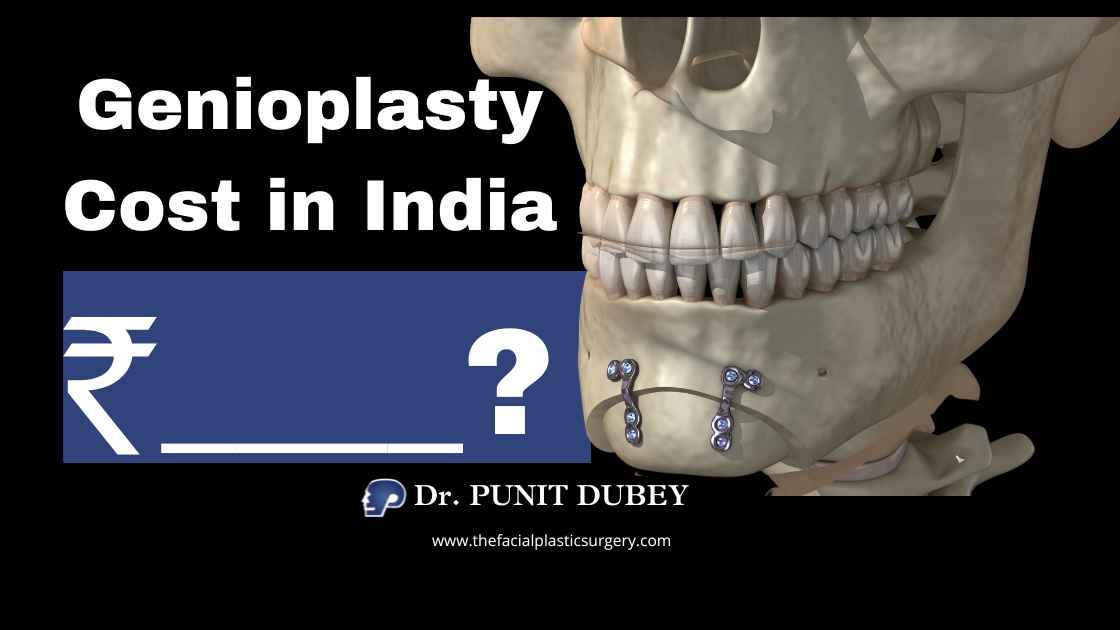
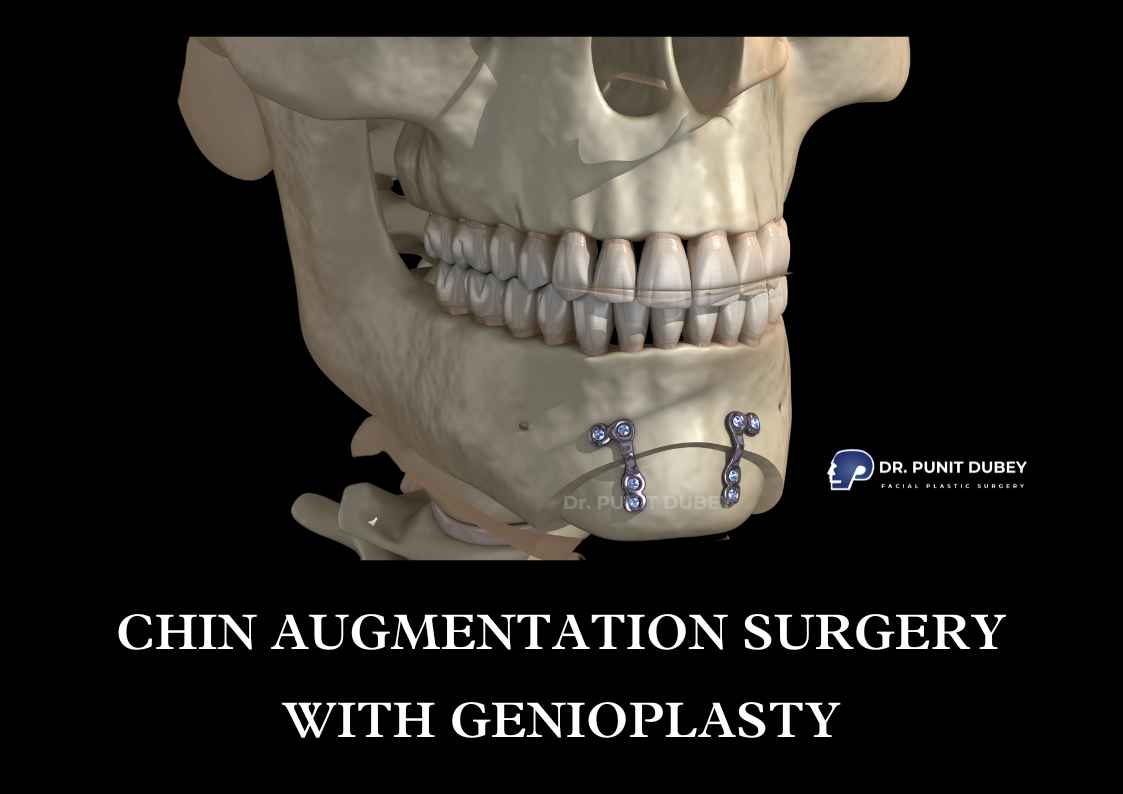
1. Chin Surgery (Genioplasty): The Most Underrated Correction
If there is one procedure that quietly transforms facial balance,
it is genioplasty.
.
The chin sits at the center of the lower face.
Even a small deviation can affect:
- Jawline symmetry
- Lip alignment
- Overall facial midline
In many patients, what appears to be:
- Jaw asymmetry
- Uneven lower face
…is actually driven by chin deviation or chin asymmetry.
Genioplasty allows us to:
- Reposition the chin in three dimensions
- Correct midline shift
- Improve symmetry without adding bulk
And importantly:
It is not an implant.
It is your own bone—repositioned.
This makes the result:
- Natural
- Stable
- Structurally accurate
In the right patient, correcting the chin alone can bring the entire face back into balance.
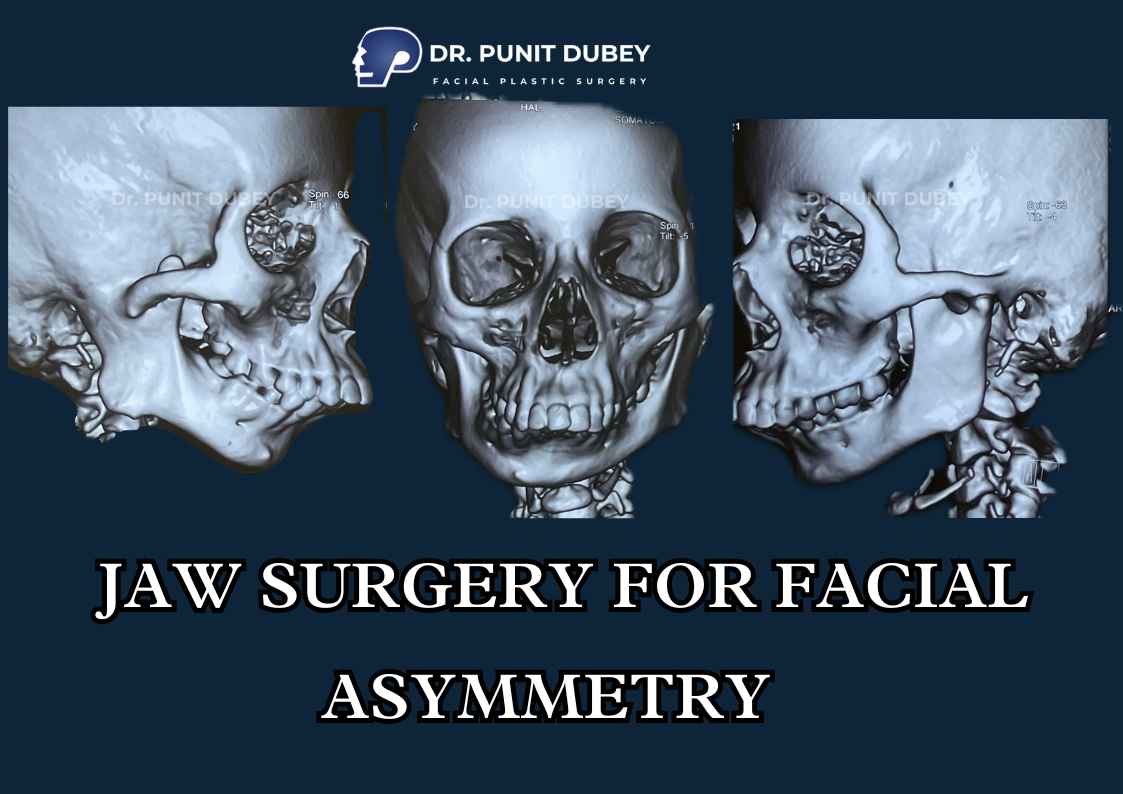
2. Jaw Surgery (Orthognathic Surgery): True Structural Correction
When facial asymmetry involves the jaw itself,
the correction must address the jaw.
This is where orthognathic surgery becomes essential.
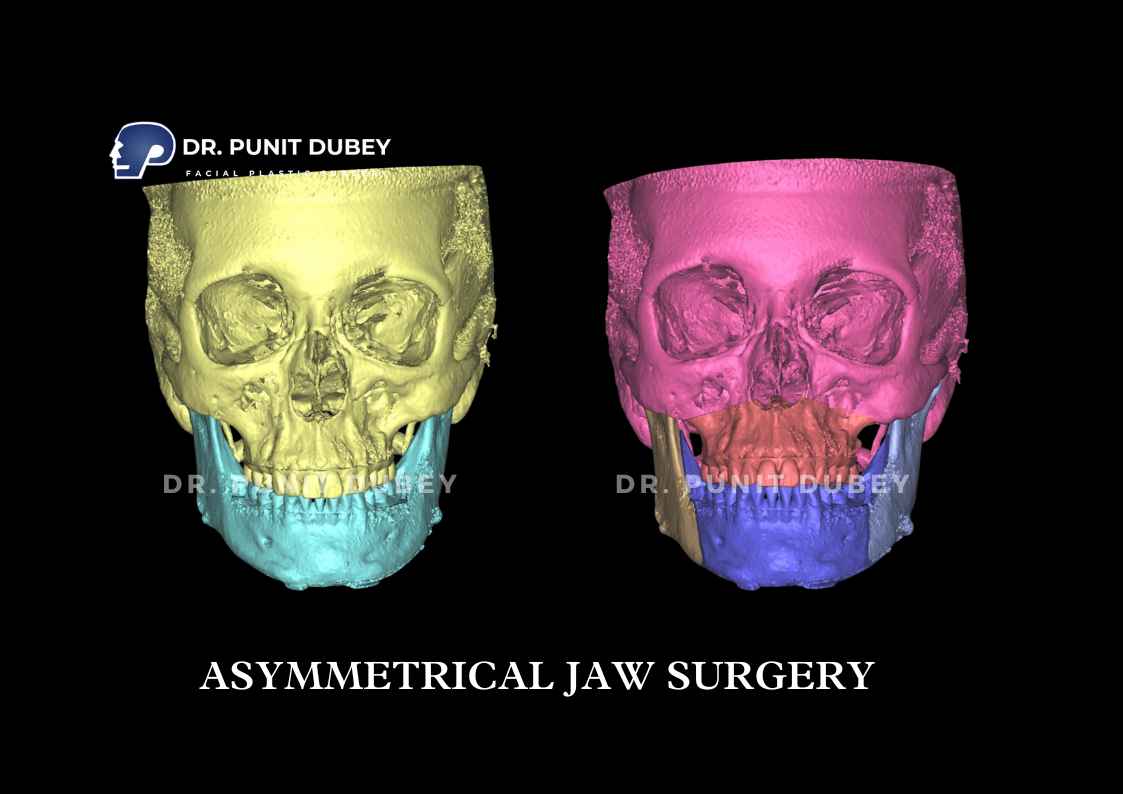
It is often misunderstood as extreme.
In reality, it is one of the most precise, planned, and transformative procedures in facial surgery.
It allows us to:
- Correct jaw length discrepancies
- Realign facial midline
- Balance the lower third of the face
- Improve both function and aesthetics
Many patients with:
- Visible facial asymmetry
- Bite issues
- Chin deviation
…actually, have an underlying jaw imbalance.
And unless that is corrected:
Everything else becomes compensation.
The difference after proper jaw correction is not just jaw symmetry.
It’s:
- Stability
- Proportion
- Harmony
And often—improved breathing, bite, and function.
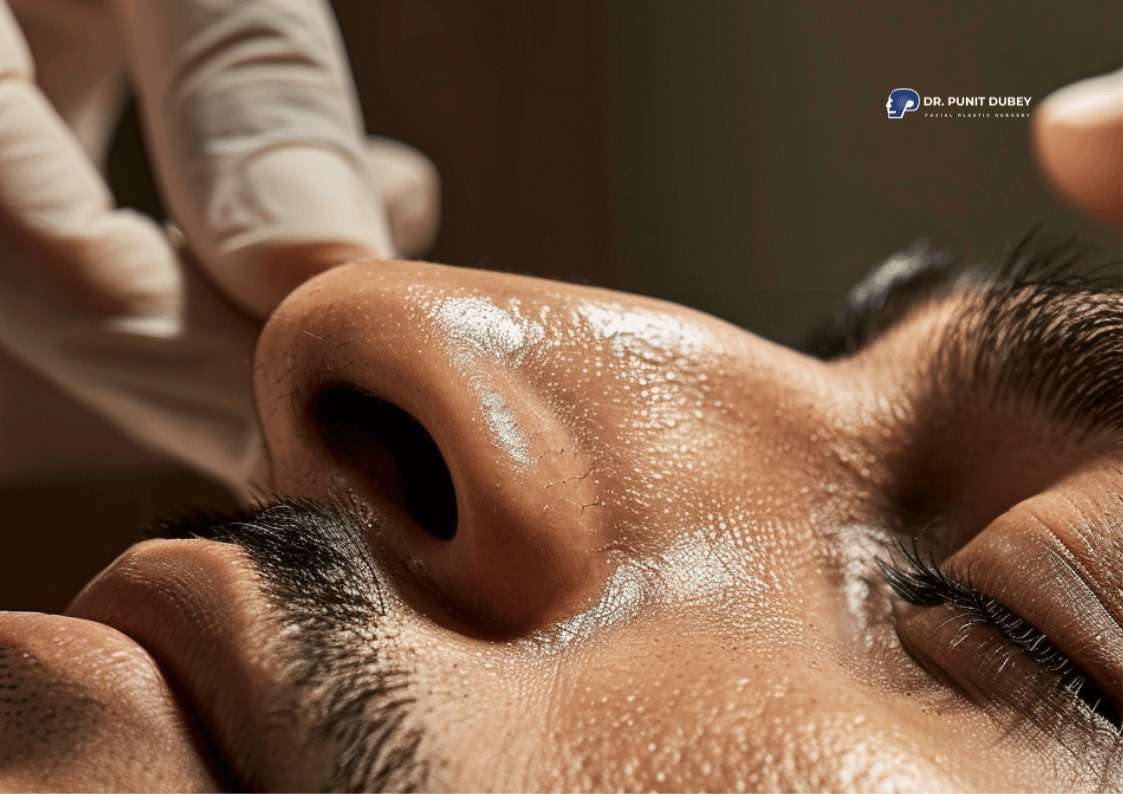
3. Rhinoplasty: Aligning the Center of the Face
The nose sits at the visual center.
Even a mild deviation can exaggerate asymmetry elsewhere.
Rhinoplasty surgery in facial asymmetry cases is not just about shape of nose.
It’s about:
- Aligning the nose with the facial midline
- Reducing visual imbalance
- Improving overall facial harmony
However:
A straight nose alone does not fix an asymmetrical face.
It works best as part of a combined structural plan.
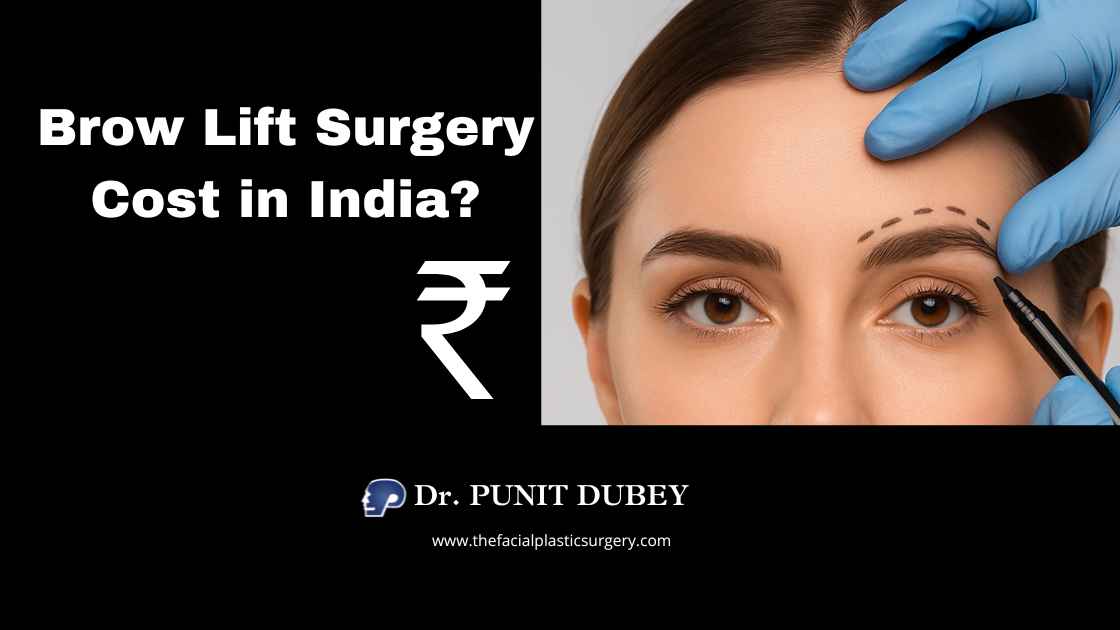
4. Eyelid & Brow Asymmetry Correction
Subtle differences in:
- Eyelid height
- Brow position
…can significantly affect how balanced the face appears.
These can be corrected through:
- Eyelid surgery (blepharoplasty)
- Brow lift surgery (brow repositioning)
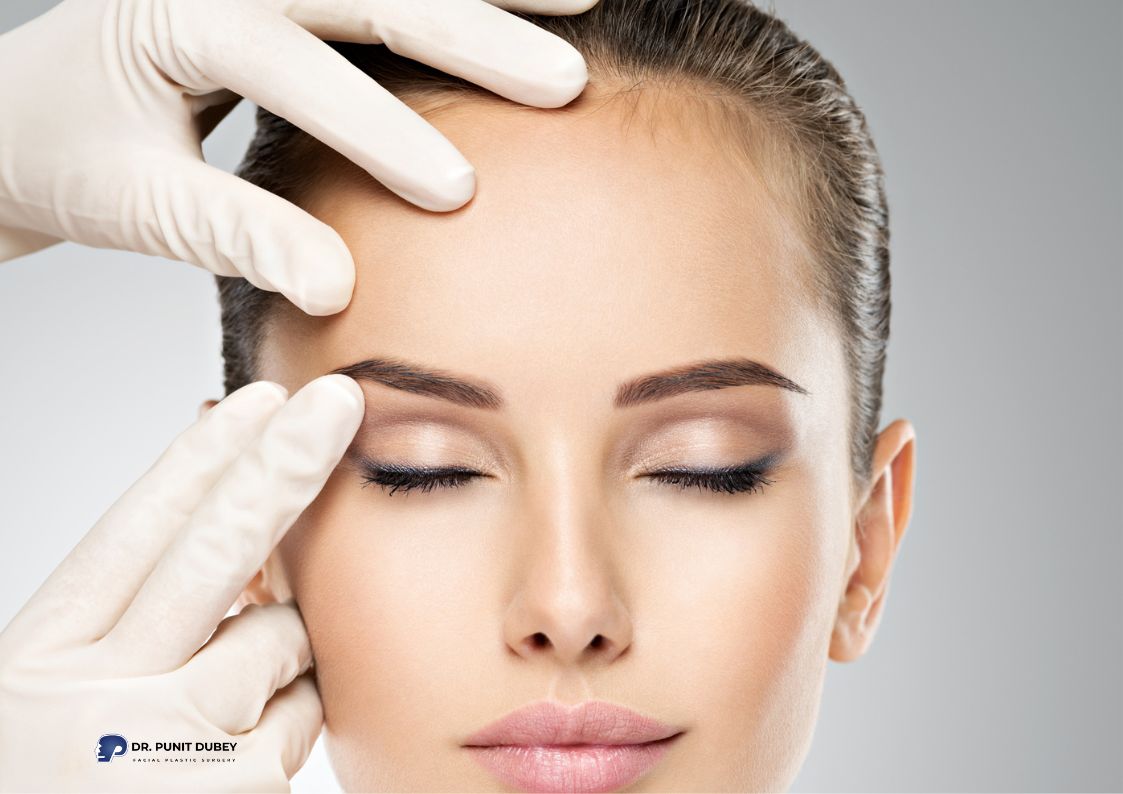
But these are refinement procedures.
They improve symmetry in the upper face—but do not address deeper structural imbalance.
5. Facelift & Soft Tissue Repositioning (Aging Asymmetry)
With age, asymmetry often becomes more visible.
Not because structure changes—but because:
- Soft tissue descends unevenly
- Volume shifts differently on each side
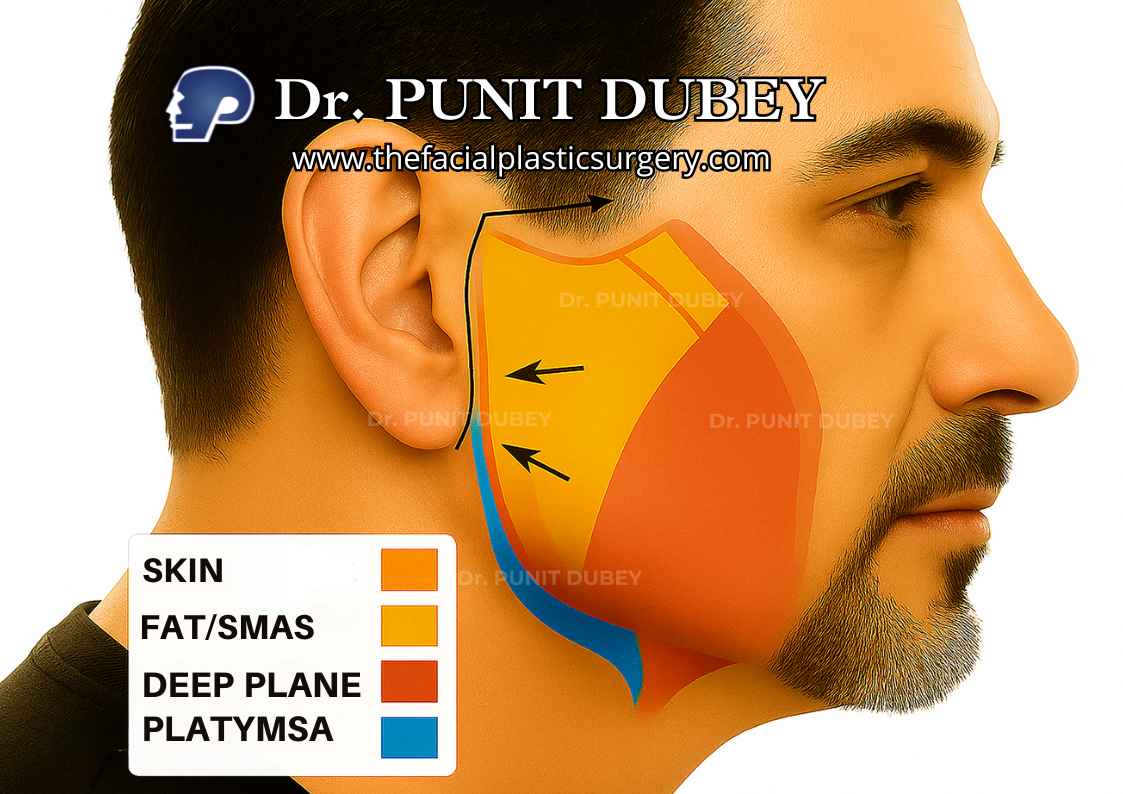
In these cases, procedures like:
help by:
- Repositioning—not tightening
- Restoring symmetry through natural tissue movement
Not pulling — repositioning.
Not tightening — restoring.
6. Facial Implants for Structural Deficiency
Not all asymmetry comes from excessive structure.
Sometimes the issue is deficiency.
One cheek may appear flatter.
The jawline may lack support on one side.
The chin projection may be weaker asymmetrically.
This is where facial implants become important.
Common Facial Implants Used in Asymmetry Correction
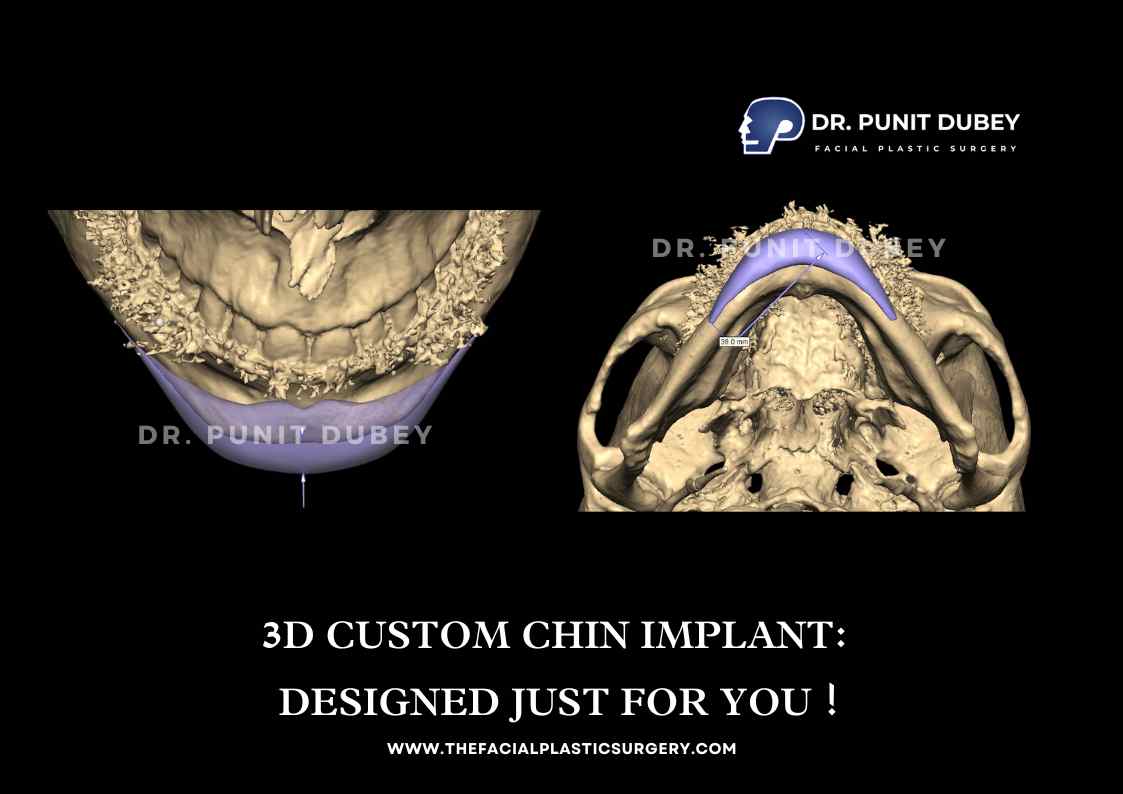
1. Chin Implants
Used for:
- mild chin deviation
- projection deficiency
- lower facial imbalance
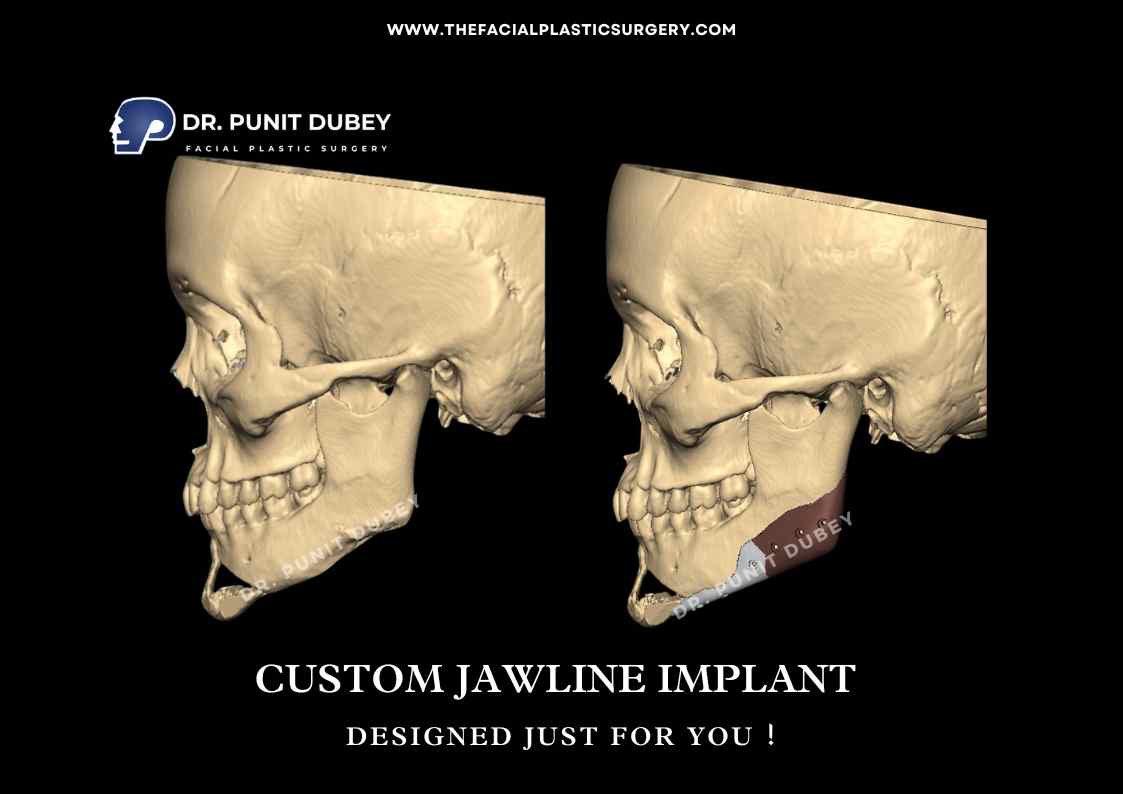
2. Jaw Implants
Helpful when:
- one jaw angle is underdeveloped
- mandibular width differs significantly
- facial width appears uneven
3. Cheek Implants
Can improve:
- midface asymmetry
- cheek projection imbalance
- hollow or flattened contours
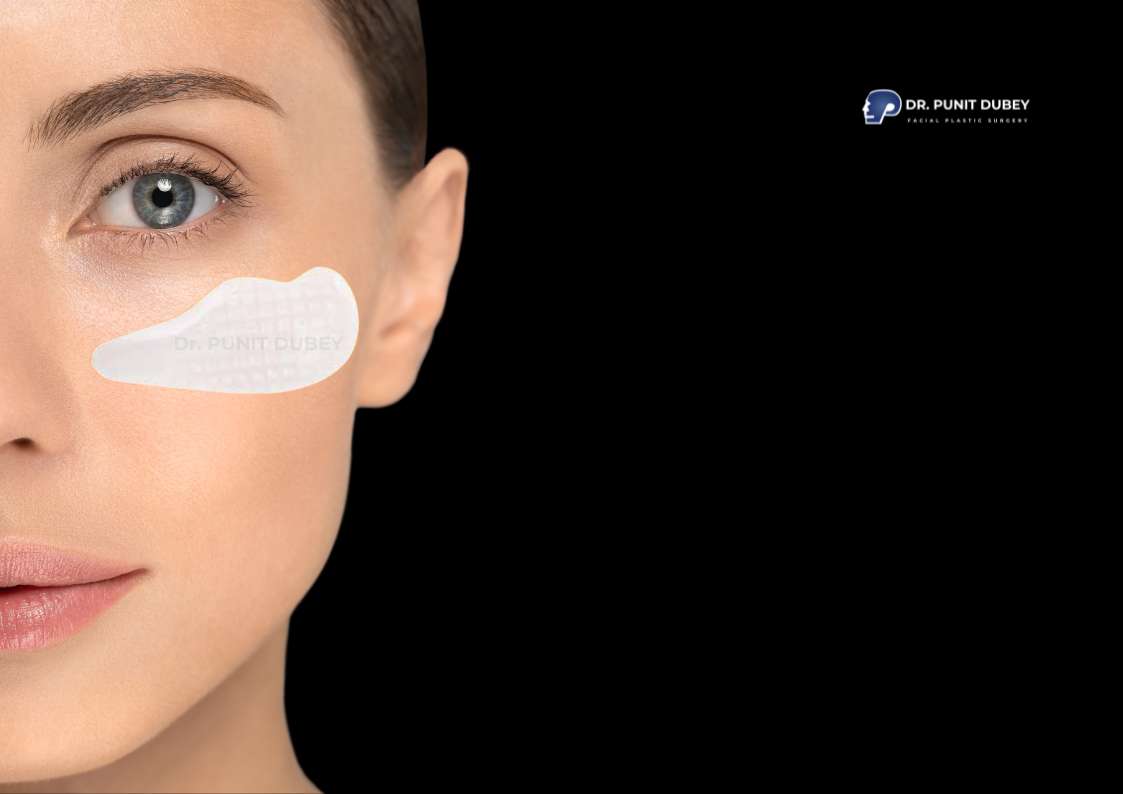
Custom Facial Implants
Custom facial implants may be created using:
- CT scans
- 3D planning
- digital facial analysis
This allows millimeter-level precision tailored to the individual face.
The difference is significant.
Standard implants add volume.
Custom implants restore architecture.
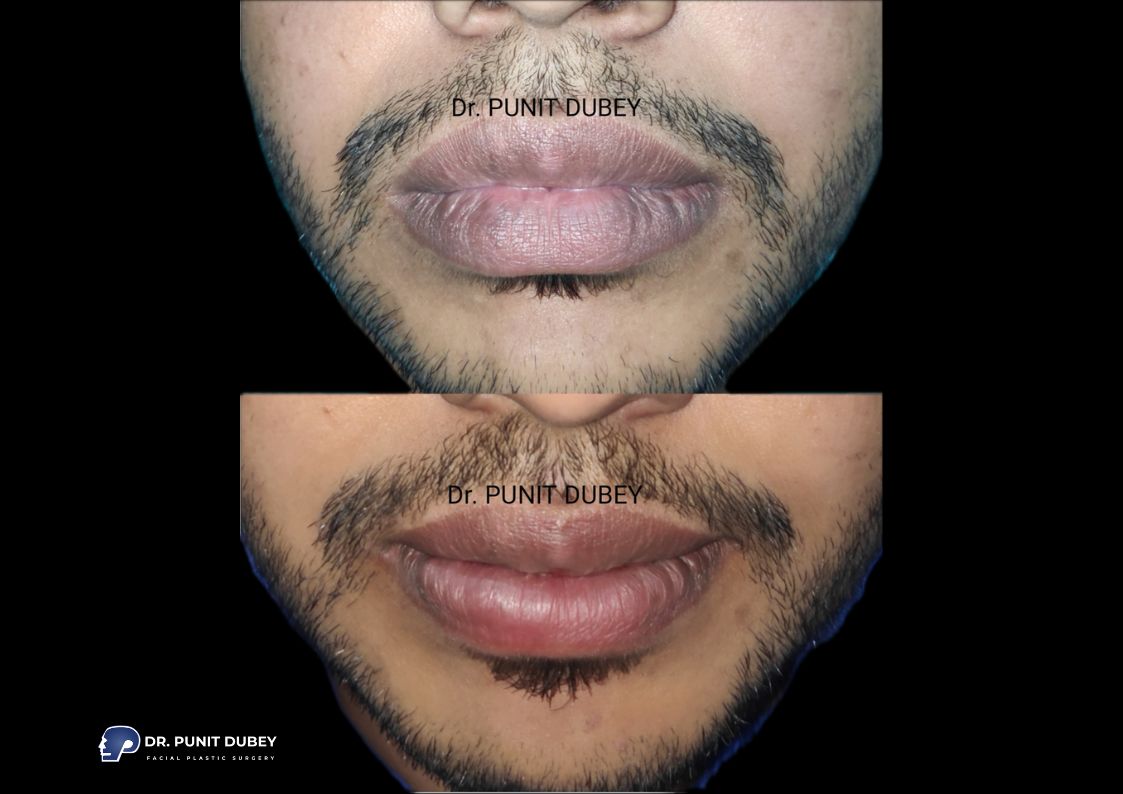
7. Lip Asymmetry Correction
Lip asymmetry may involve:
- uneven upper lip height
- asymmetric cupid’s bow
- lower lip imbalance
- muscular pull differences
- asymmetry during smiling
Depending on the cause, correction may involve:
- surgical lip repositioning
- lip lift refinement
- muscle balancing
- structural fat grafting
- selective lip filler correction
- lip reduction surgery for lip asymmetry
Most importantly:
the lips should remain expressive.
Natural movement matters more than rigid symmetry.
8. Ear Asymmetry & Facial Balance
Ears are rarely discussed in facial harmony conversations, yet they significantly affect perceived balance.
Differences in:
- ear projection
- height
- rotation
- shape
can subtly influence overall facial proportions.
Procedures such as otoplasty or ear reshaping, protruding ears surgery may improve:
- side-profile balance
- craniofacial proportion
- facial symmetry in photographs
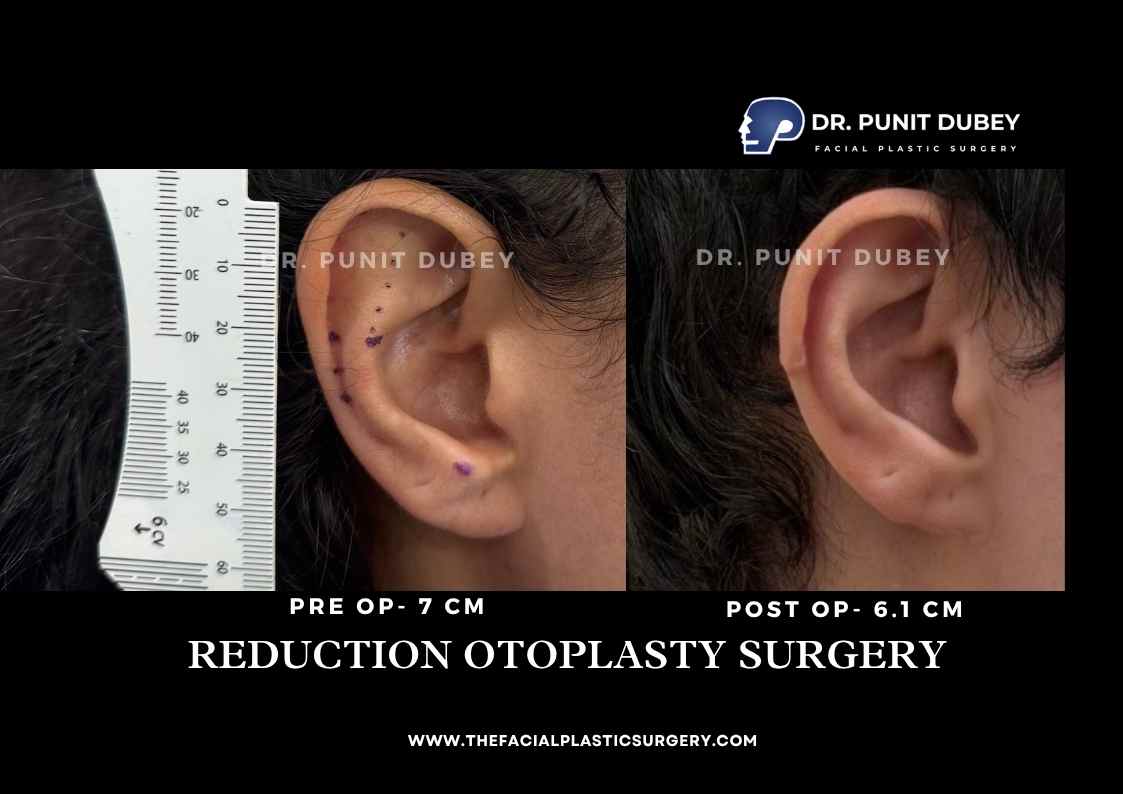
Especially in profile-dominant asymmetry.
When patients explore facial asymmetry surgery cost in India,
the numbers vary widely—and for good reason.
Because the cost is not tied to a single procedure.
It depends on:
- Type of asymmetry
- Complexity of correction
- Whether surgery involves bone, soft tissue, or both
- Surgeon expertise and planning precision
Approximate Facial Asymmetry Cost Overview (India)
- Genioplasty (chin correction): ₹1,20,000 – ₹3,50,000 ($1,450 – $4,200)
- Jaw Surgery / Orthognathic Surgery: ₹4,00,000 – ₹10,00,000+ ($4,800 – $12,000+)
- Rhinoplasty (if required): ₹1,50,000 – ₹4,00,000 ($1,800 – $4,800)
- Facial Implants (chin / jaw / cheek): ₹1,00,000 – ₹6,00,000+ ($1,200 – $7,200+)
- Custom 3D Facial Implants: ₹1,50,000 – ₹8,00,000+ ($1,800 – $9,600+)
- Midface Lift / Cheek Lift: ₹1,80,000 – ₹2,50,000 ($2,150 – $3,000)
- Deep Plane Facelift Surgery: Starting around ₹2,50,000+ ($3,000+)
- Lip Asymmetry Correction Surgery: ₹40,000 – ₹1,50,000 ($480 – $1,800)
- Otoplasty / Ear Asymmetry Correction: ₹40,000 – ₹2,00,000 ($480 – $2,400)
- Forehead Contouring / Brow Bone Correction: ₹2,00,000 – ₹4,00,000+ ($2,400 – $4,800+)
Advanced Planning & Technology (Optional in Complex Cases)
- 3D CT Planning & Surgical Simulation: ₹25,000 – ₹1,00,000 ($300 – $1,200)
- Custom Surgical Guides / 3D Printing: ₹40,000 – ₹2,00,000+ ($480 – $2,400+)
- Custom Titanium / PEEK Implants: Additional ₹40,000 – ₹5,00,000+ (Additional $480 – $6,000+)
These are broad ranges—not fixed prices.
What You Are Actually Paying For
Not just the procedure.
But:
- Diagnosis
- Planning
- Execution
- Precision
Because in asymmetry correction:
The difference is not in what is done.
It is in how accurately it is done.
Why Cost Alone Is a Poor Decision Metric
Choosing based on cost alone often leads to:
- Over-treatment
- Under-correction
- Multiple revisions
And eventually—higher overall cost.
Precision upfront is always more efficient than correction later.